Rock Climbs at the Western Tip of Europe II
in featured
Documentary screenings: Yupik Outdoor Store - Vertical Escalada - The West Climbing Centre
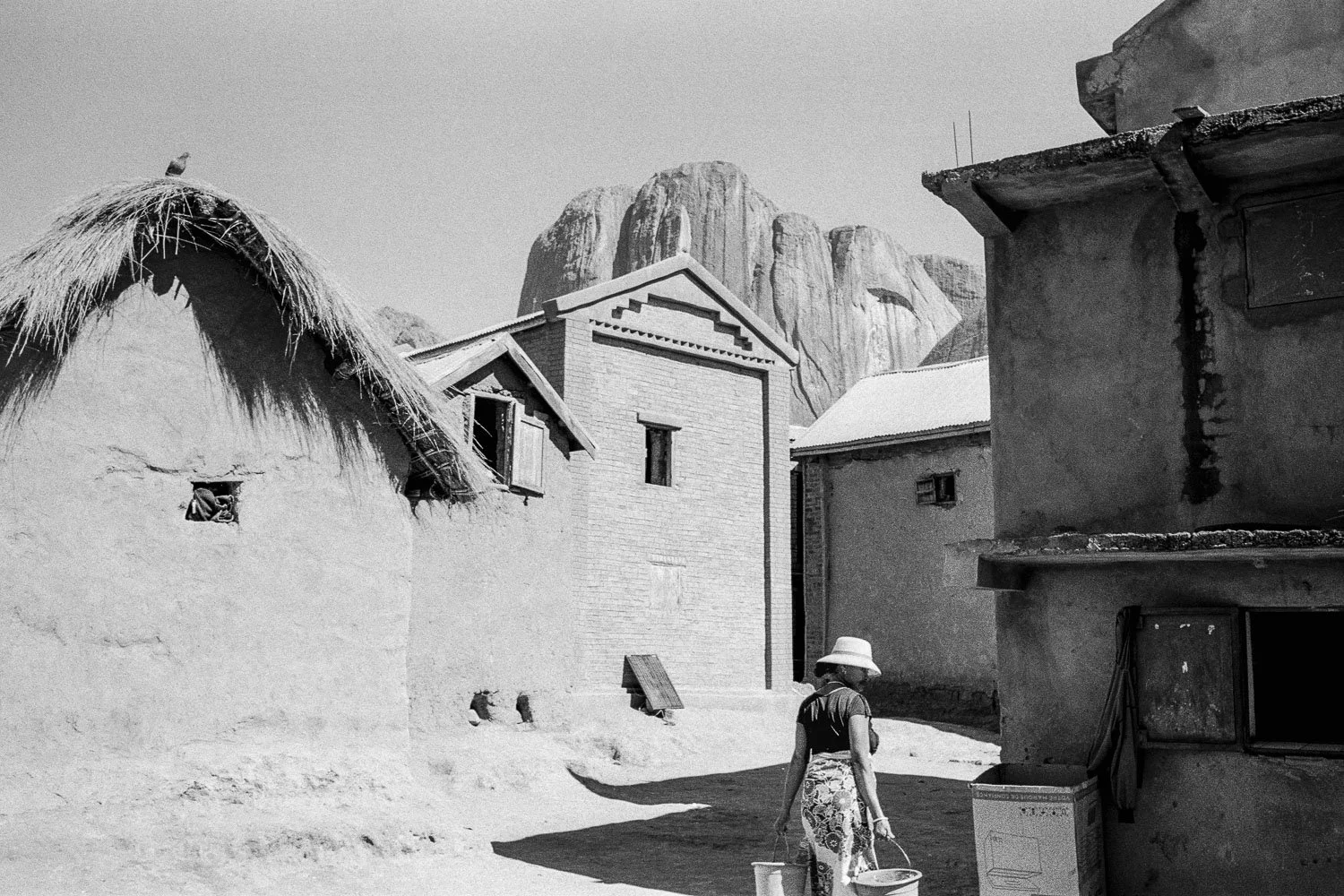
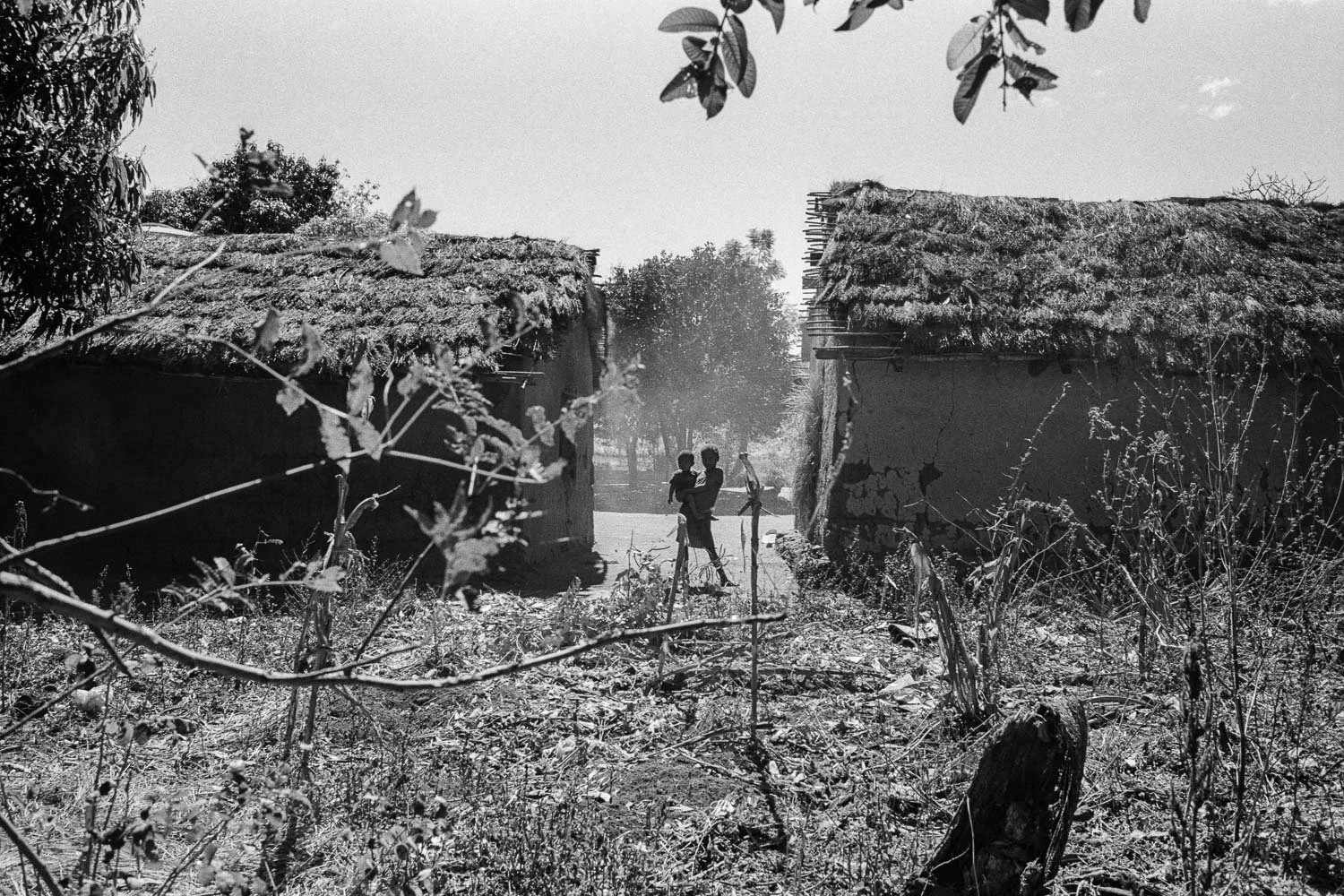
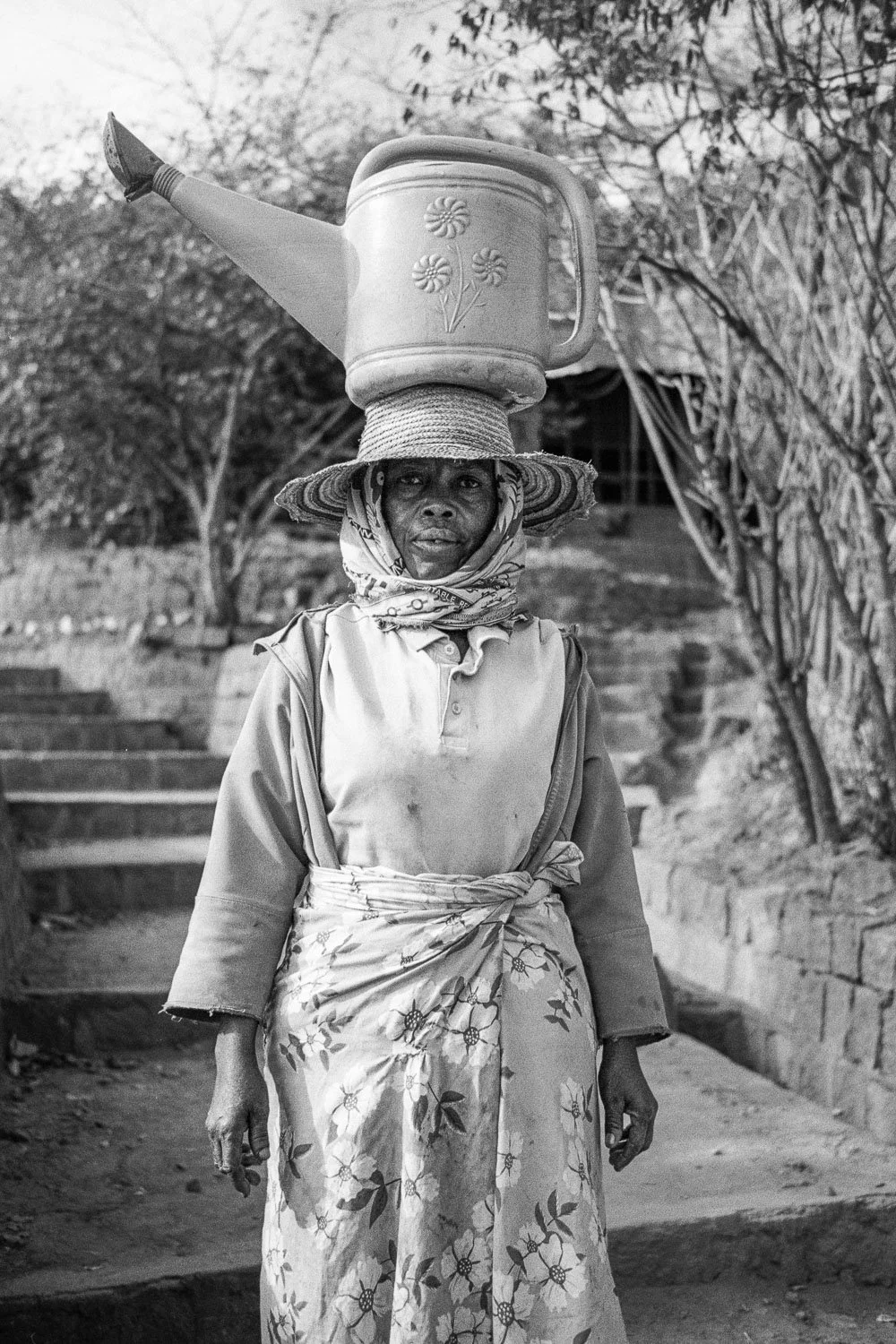
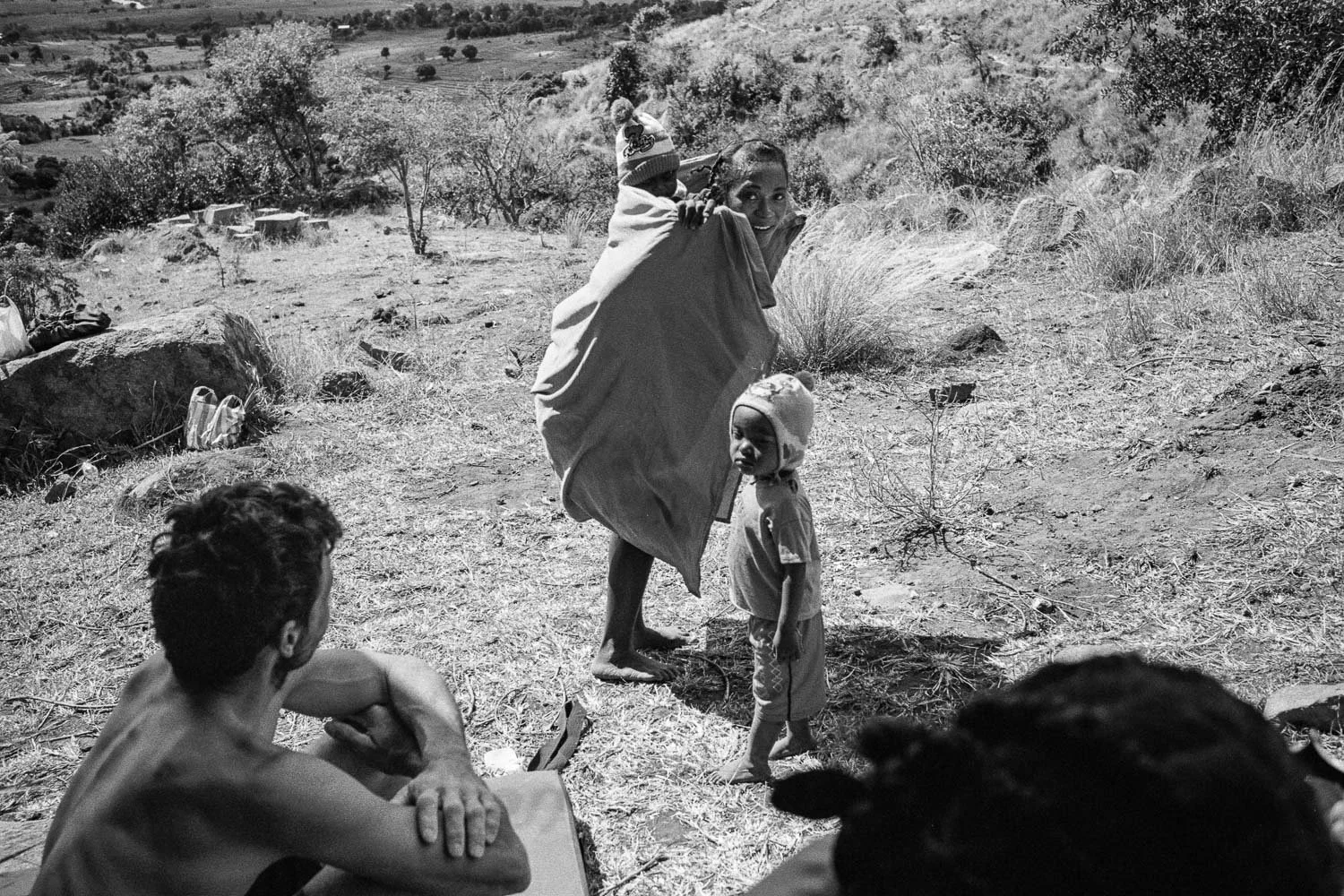
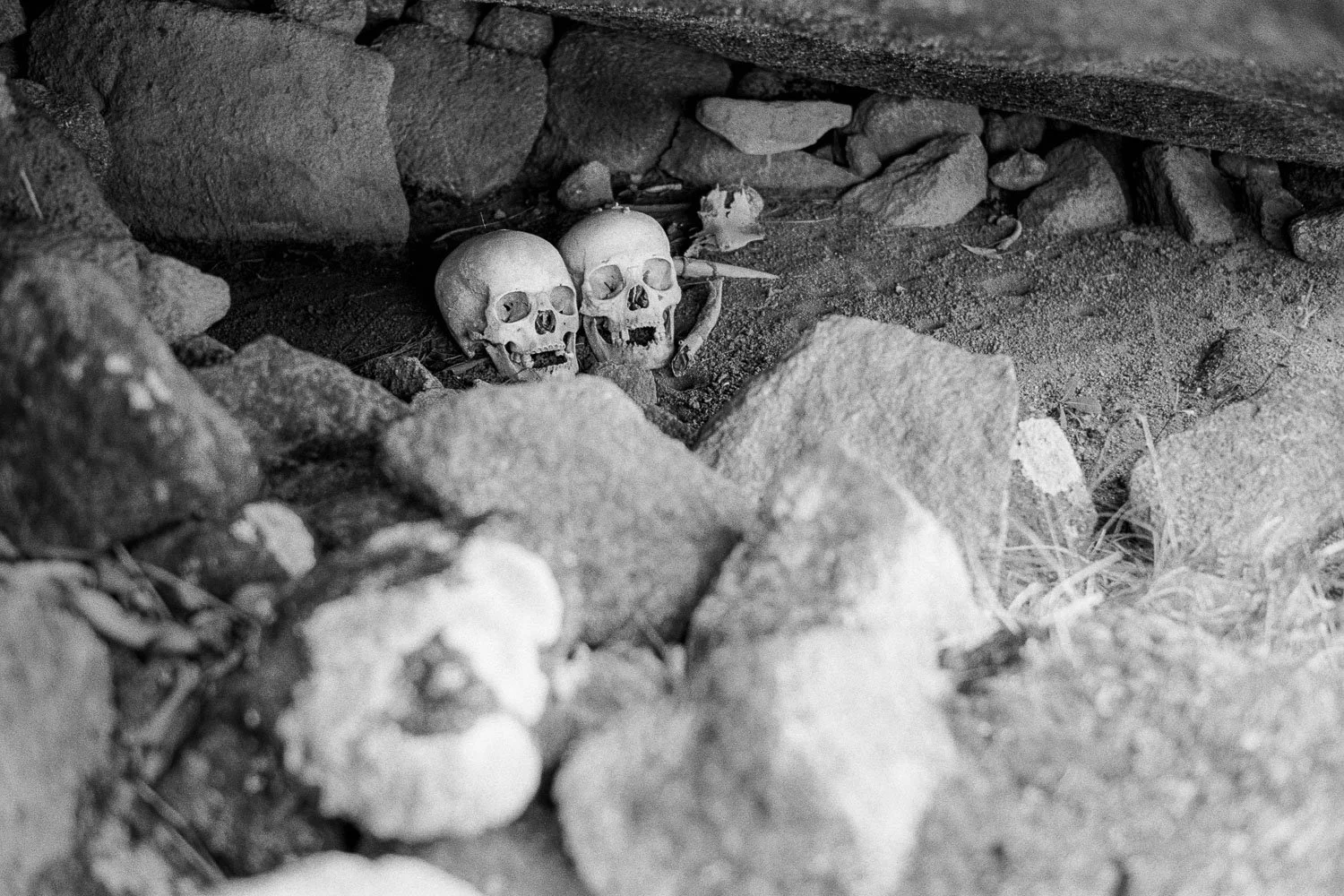
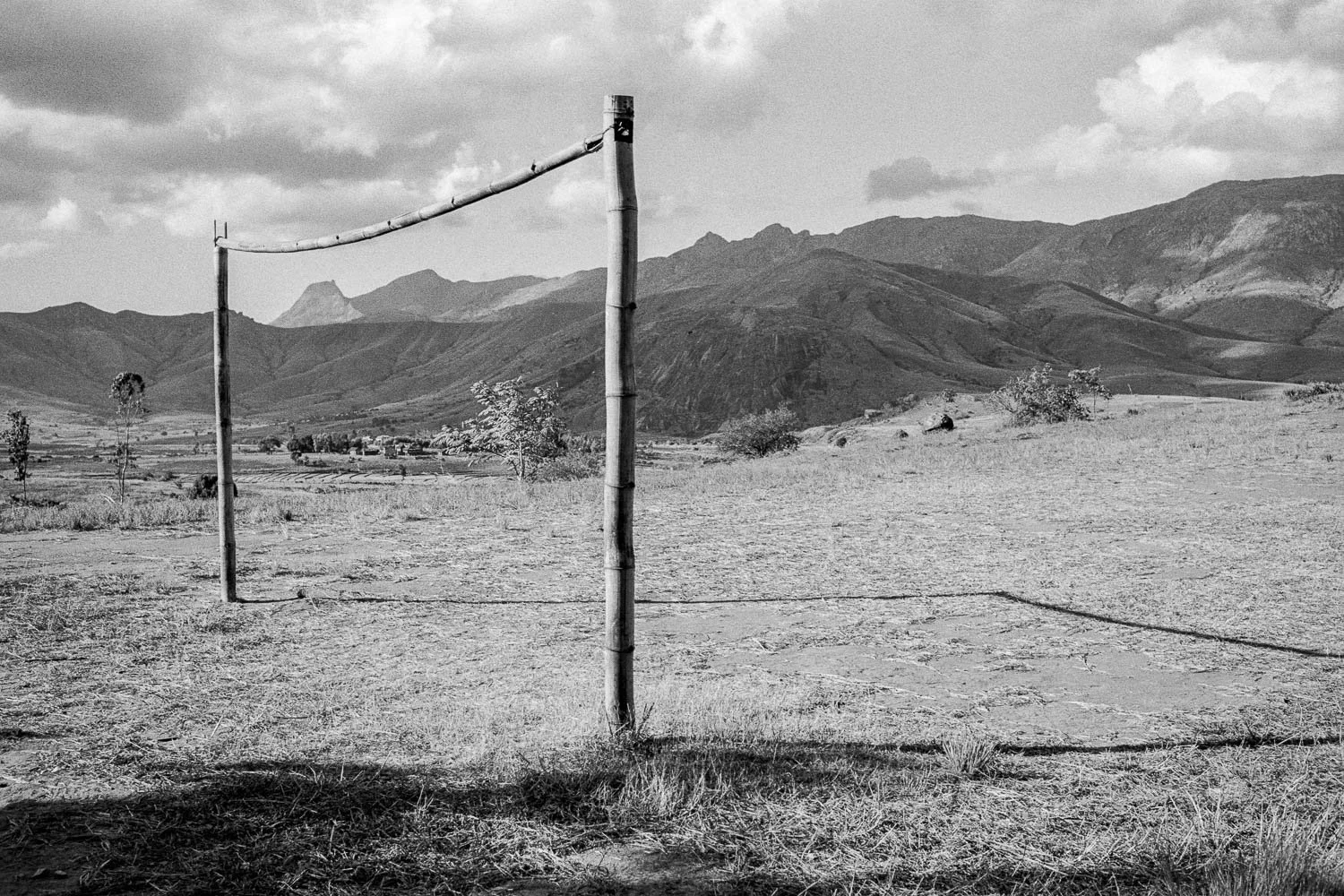
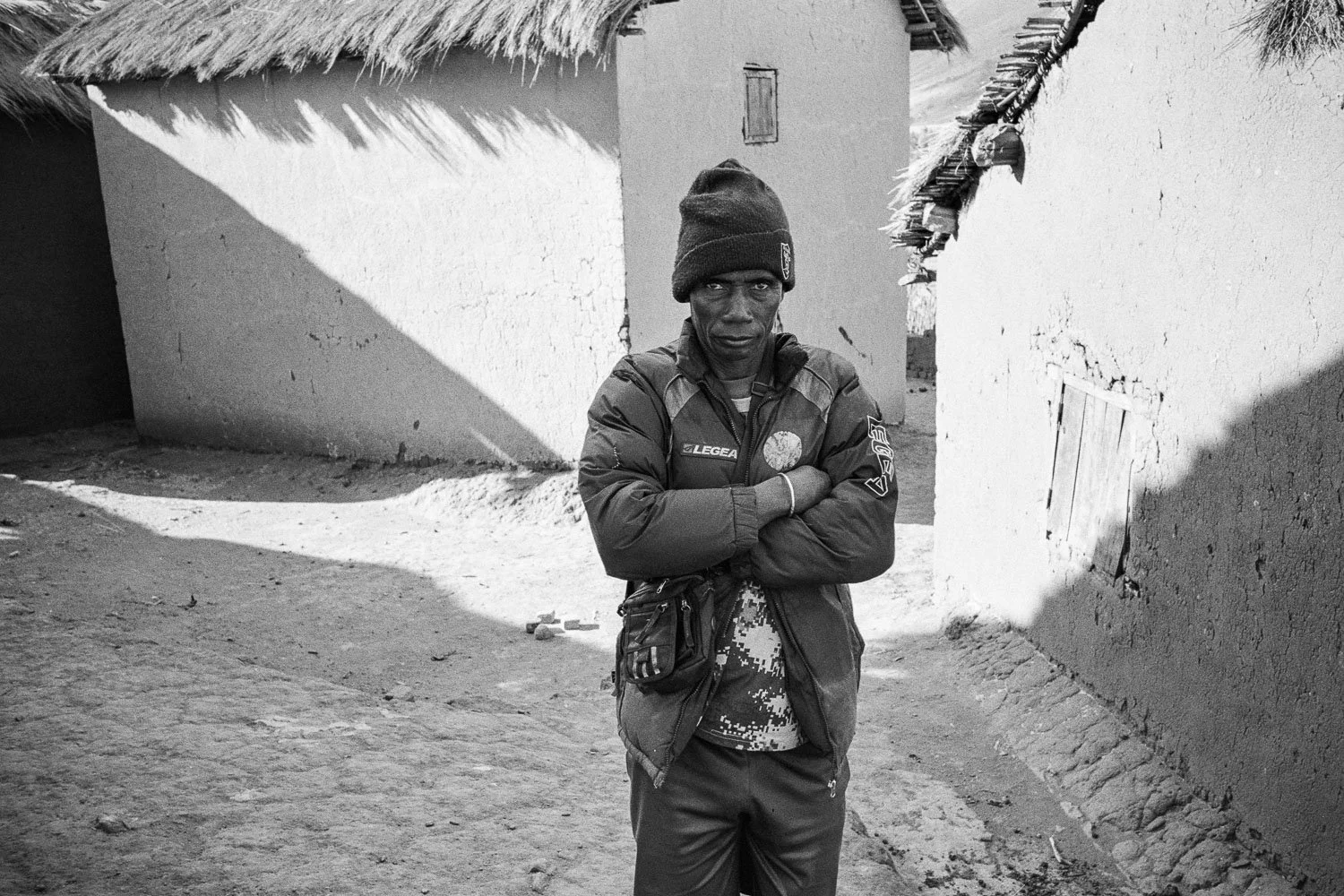
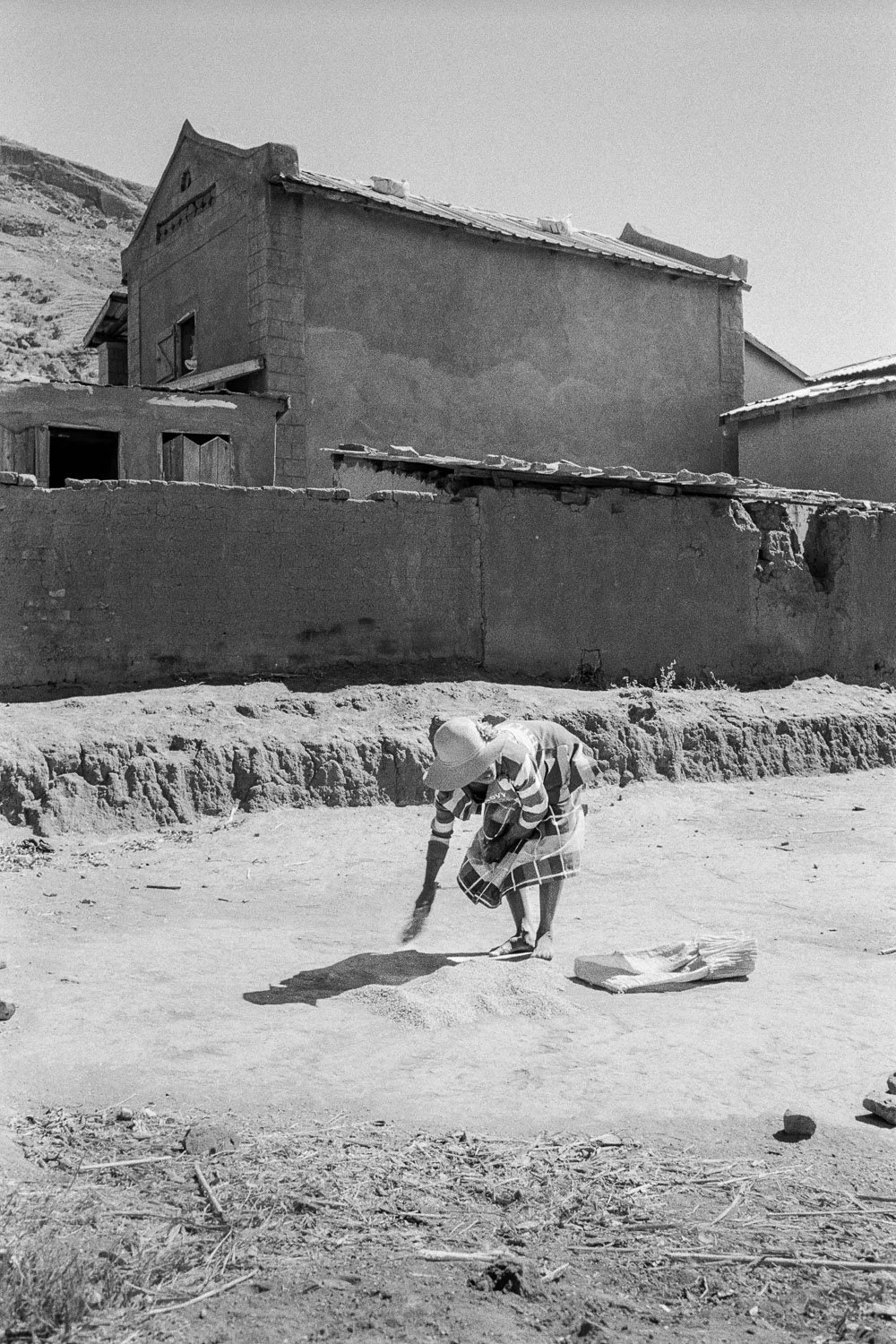
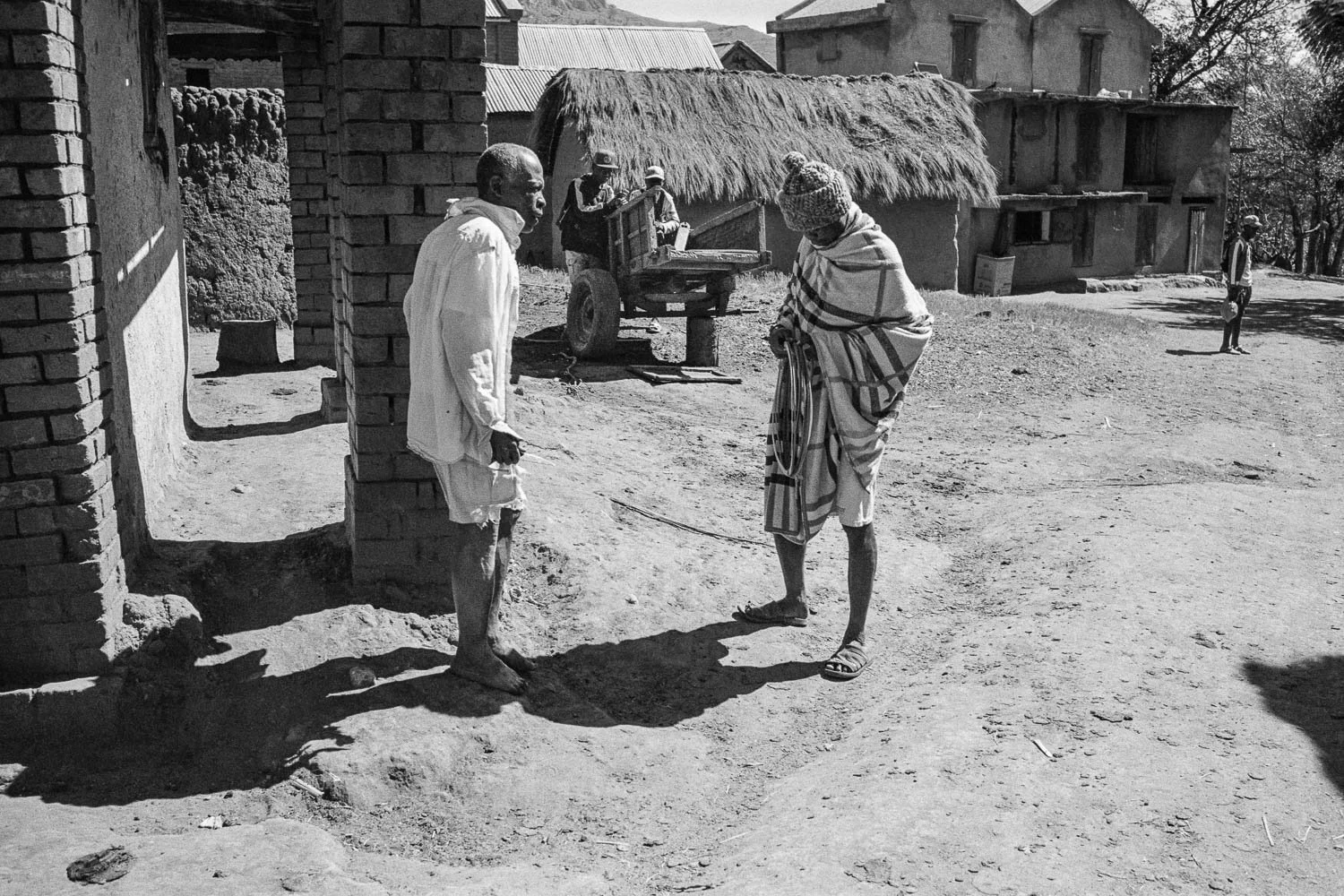
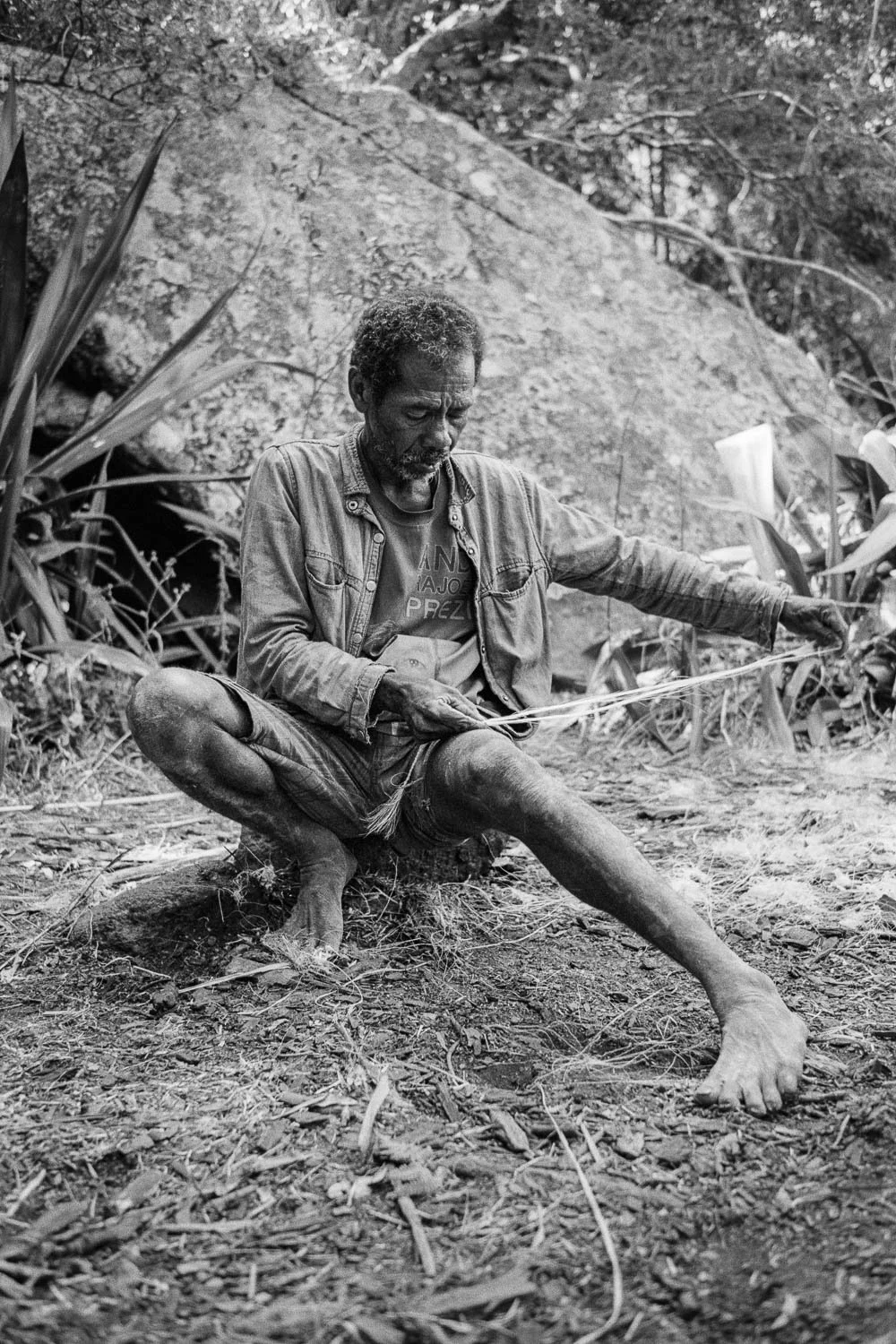
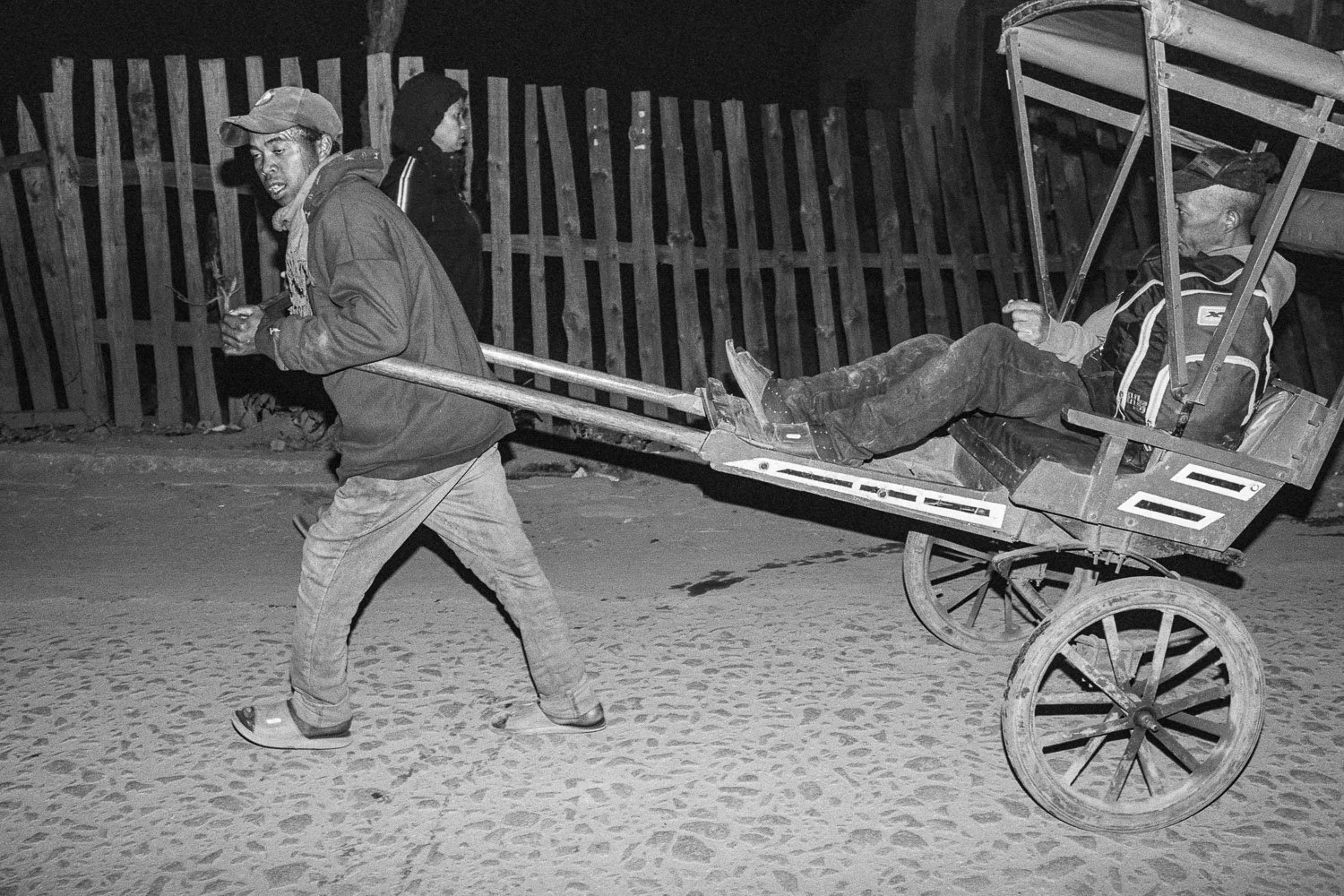
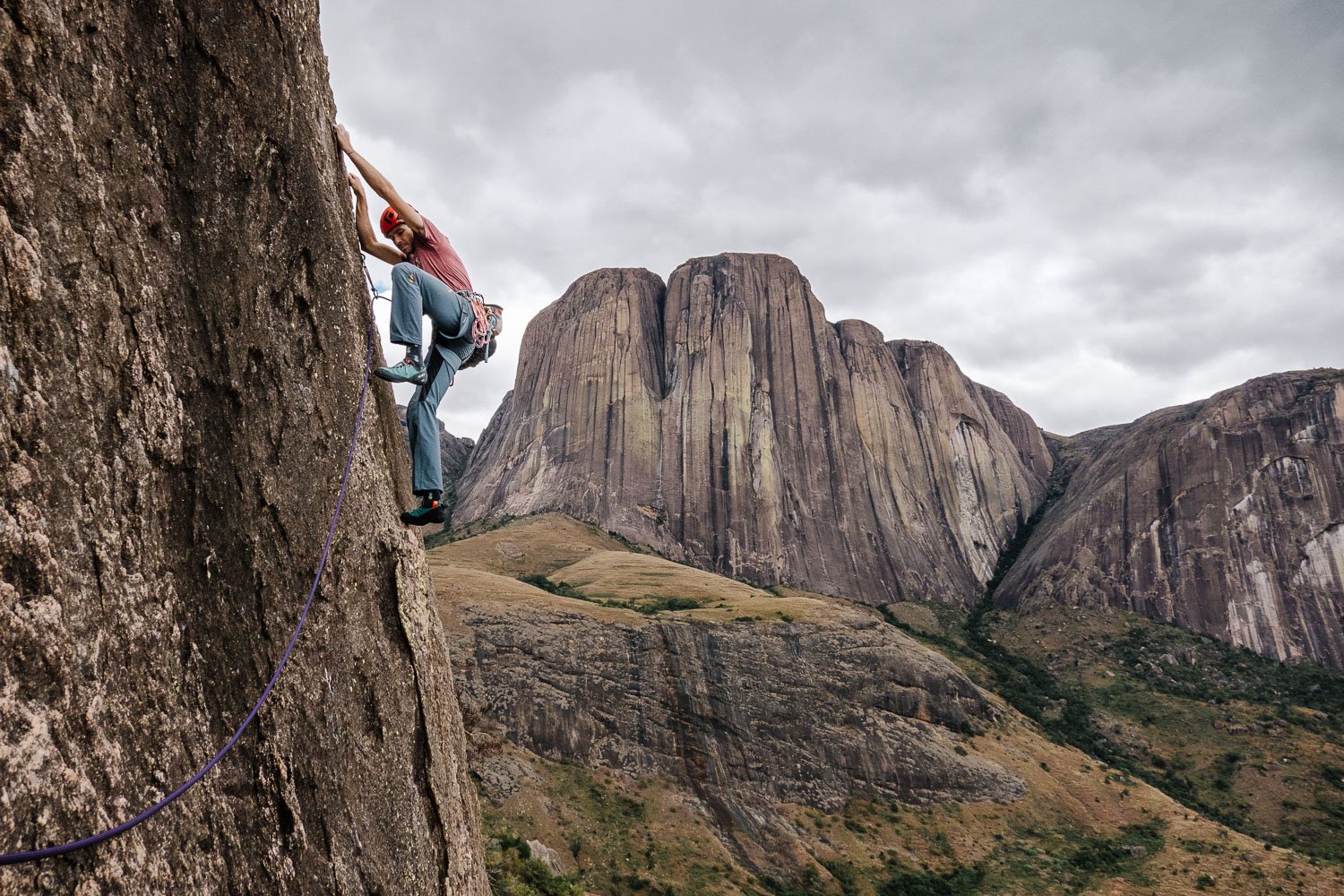
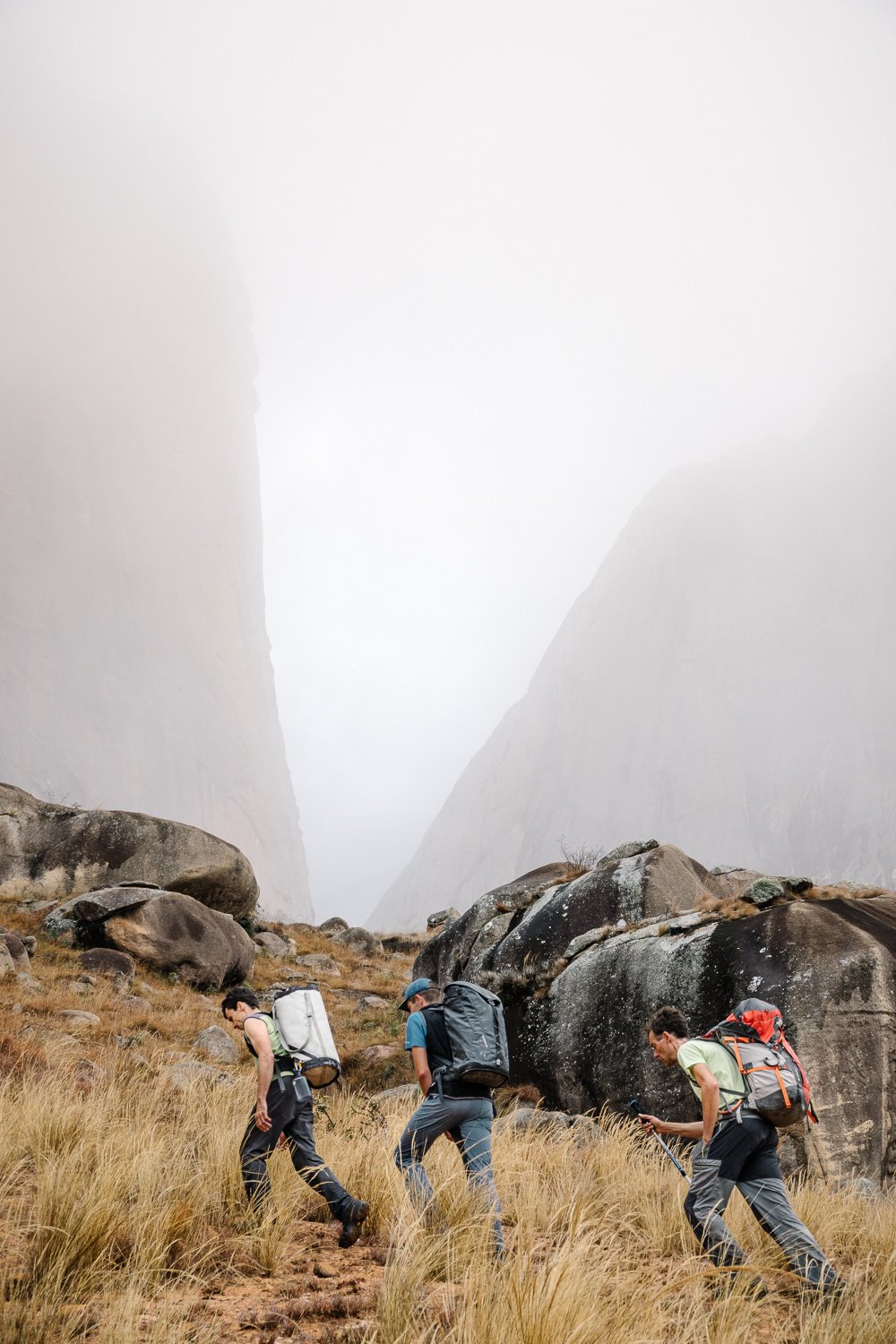
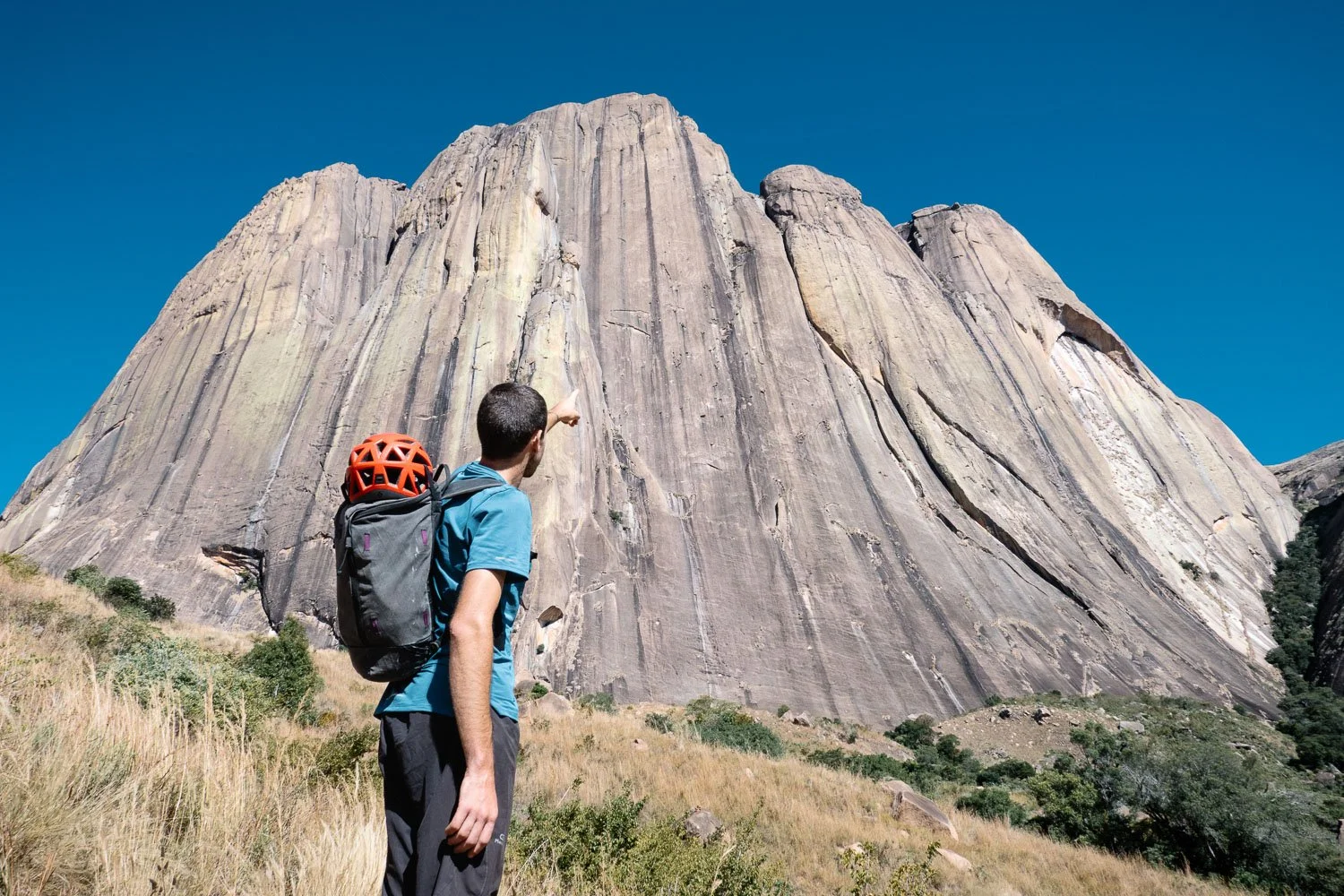
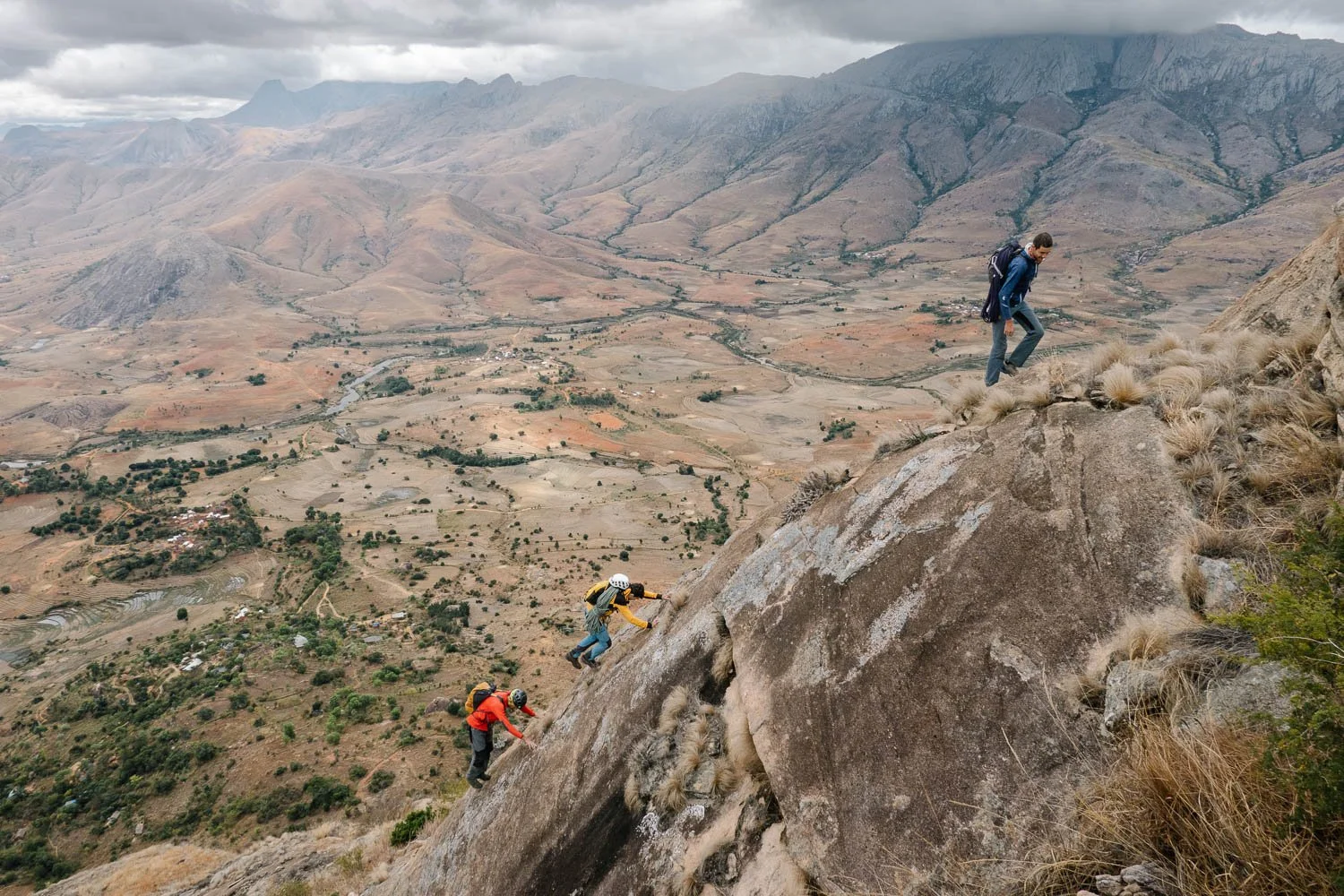
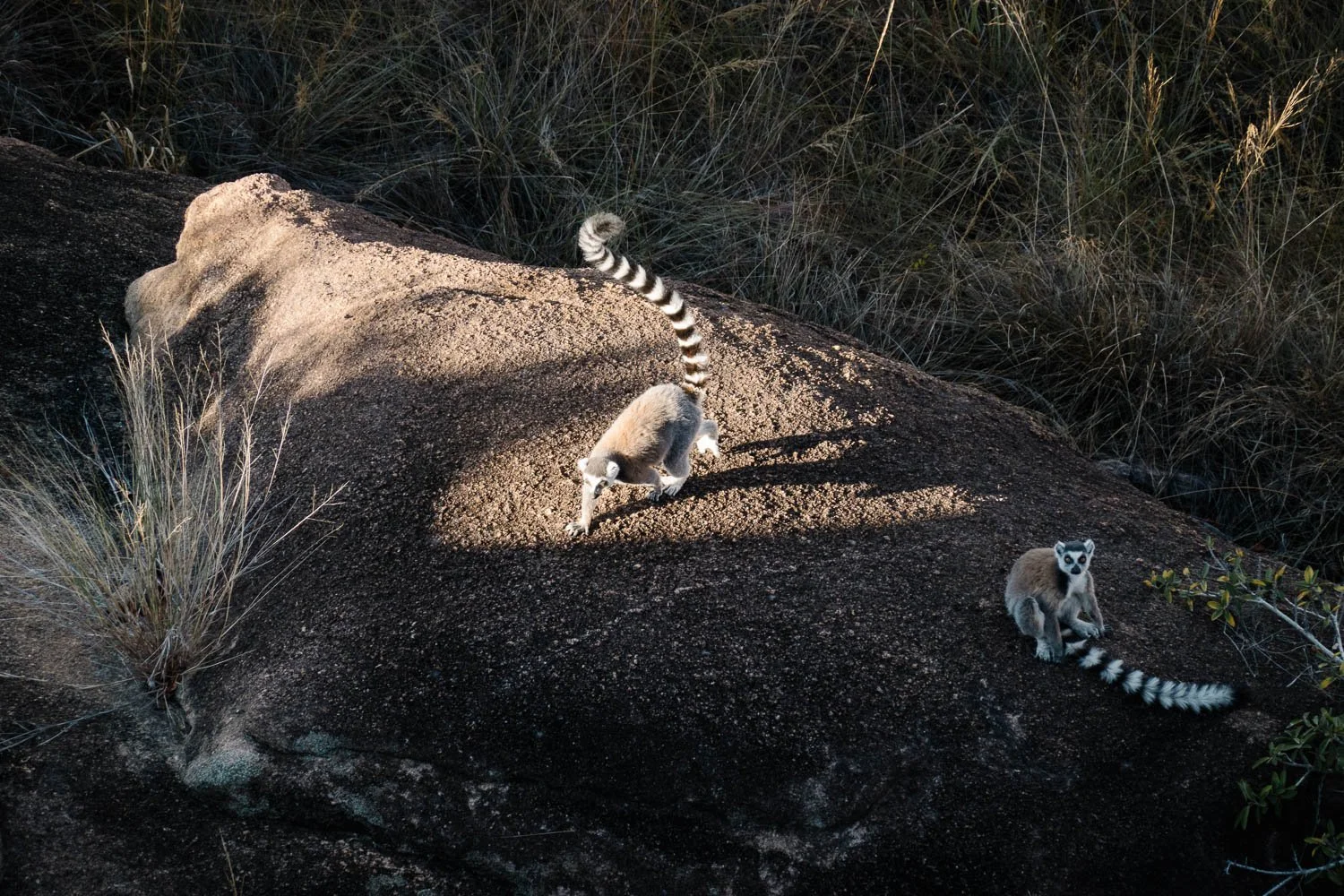
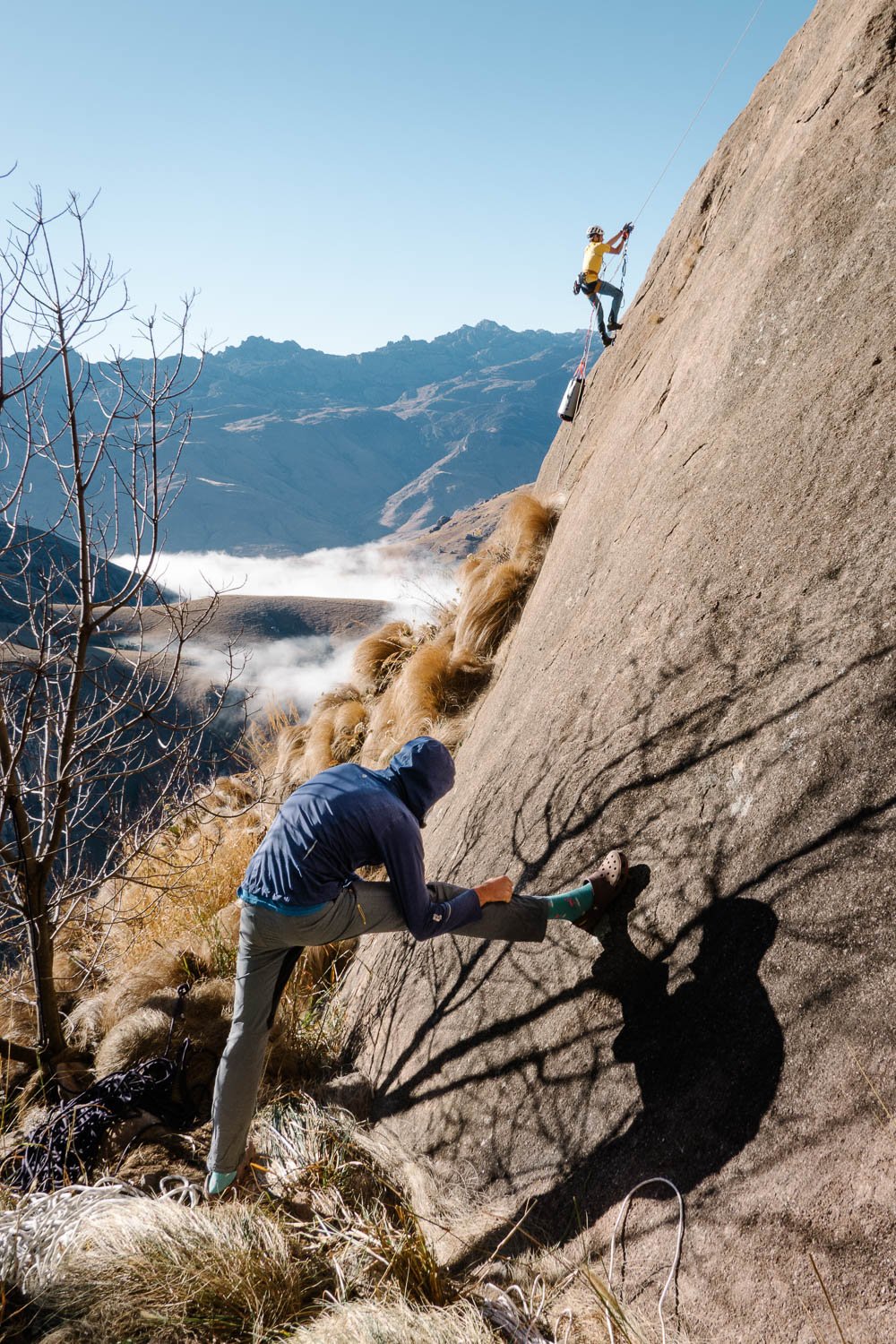
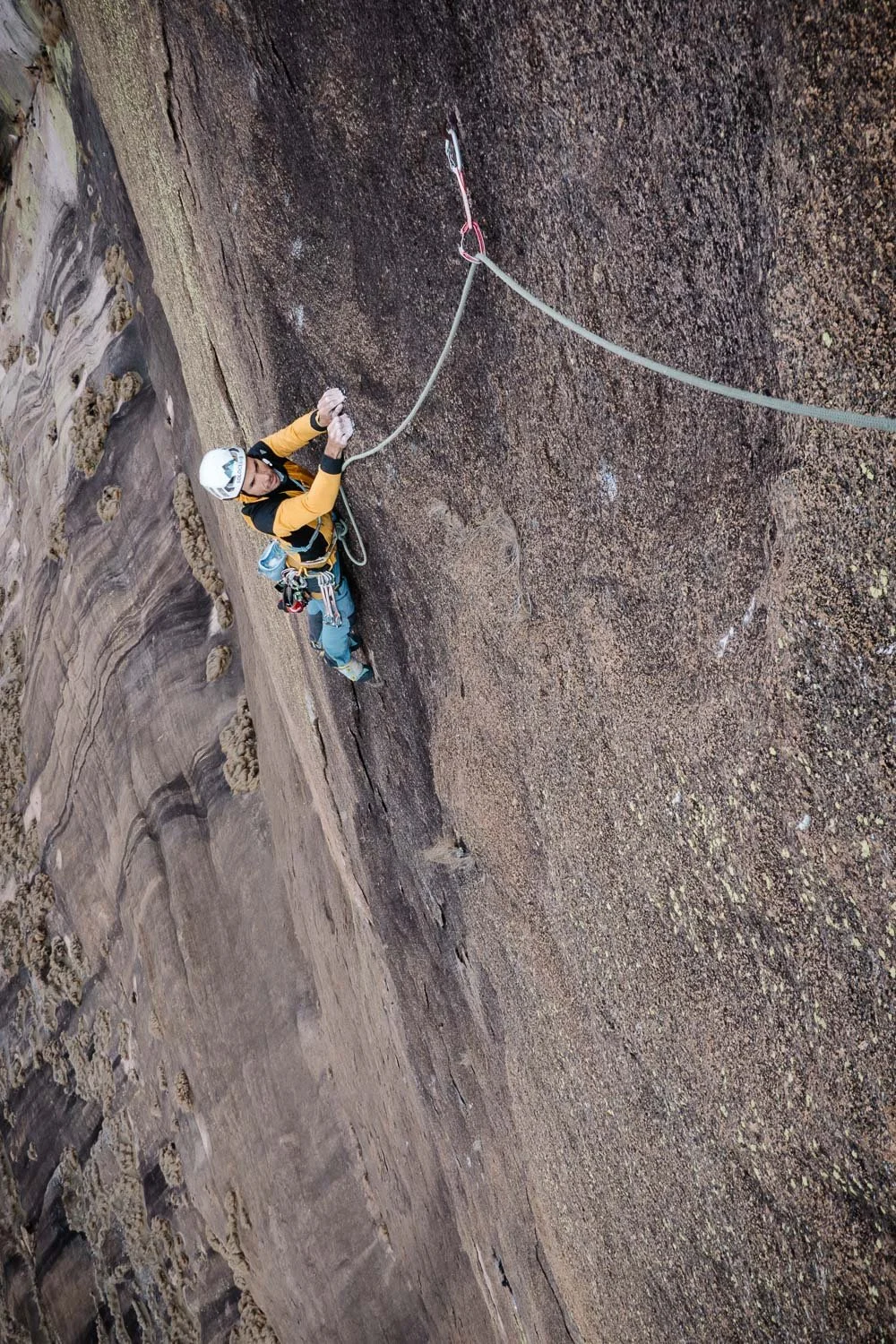
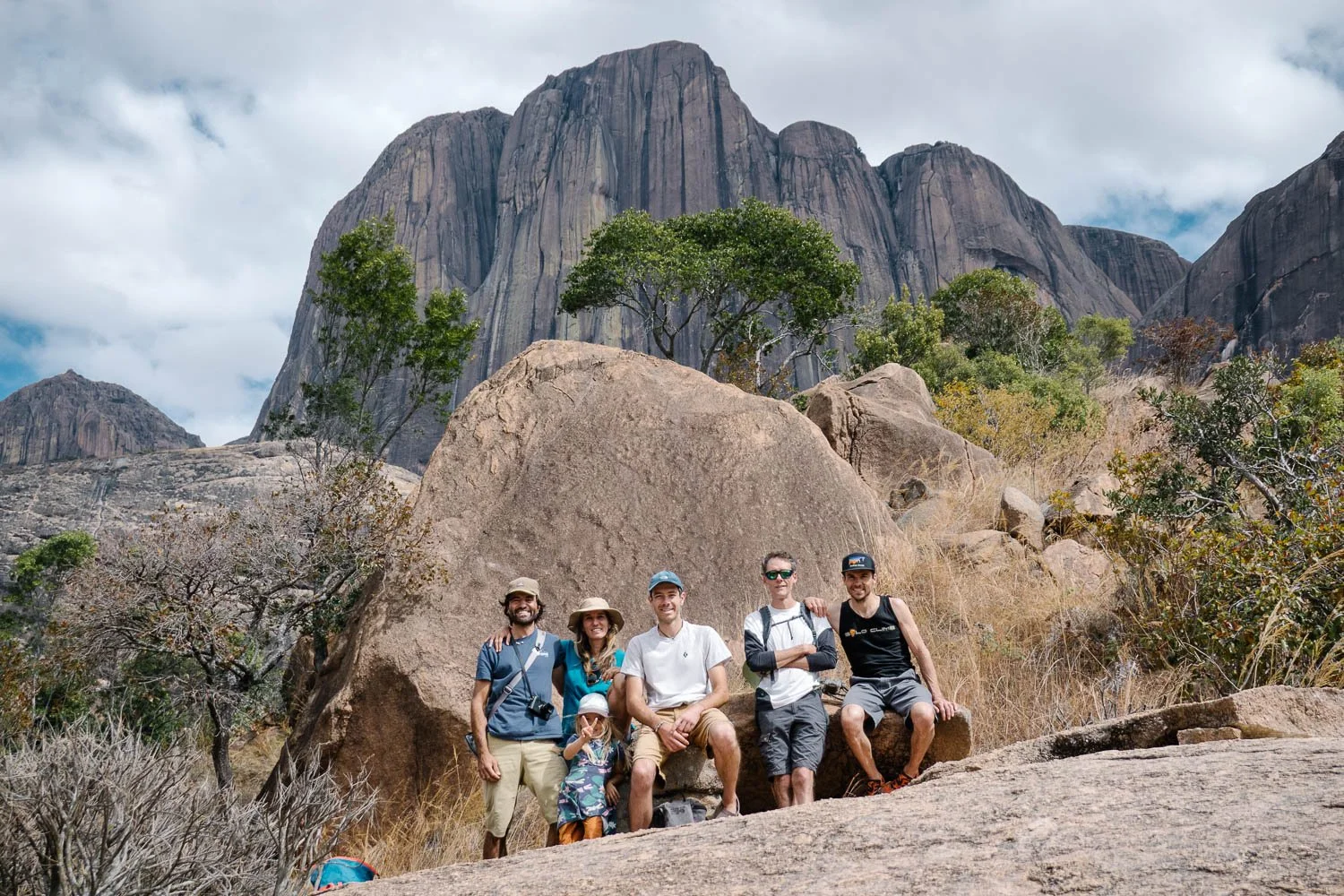
Visiting Madagascar was one of my climbing dreams of youth. Ever since I read Desnivel's article (1/2000) of Francisco Blanco and Toti Vales opening Mora Mora at the Tsaranoro Massif, the sheer nature of its faces, direct lines on perfect yellow granite, and the surrounding African highlands landscape and tribal culture, were some of the elements that fascinated me prior to this trip. This summer, I was lucky enough to bring this project to fruition, fitting it as a break between the guiding season. The usual expedition friends, plus my family, were the ideal travel companions and all the above-mentioned expectations were surpassed.
The team was motivated, the weather was great, the hosting and living at Tsarasoa campground (to which the presence of my daughter and partner joyful interactions with the local villagers also contributed a lot) a mellow alternation from the rock frenzy.
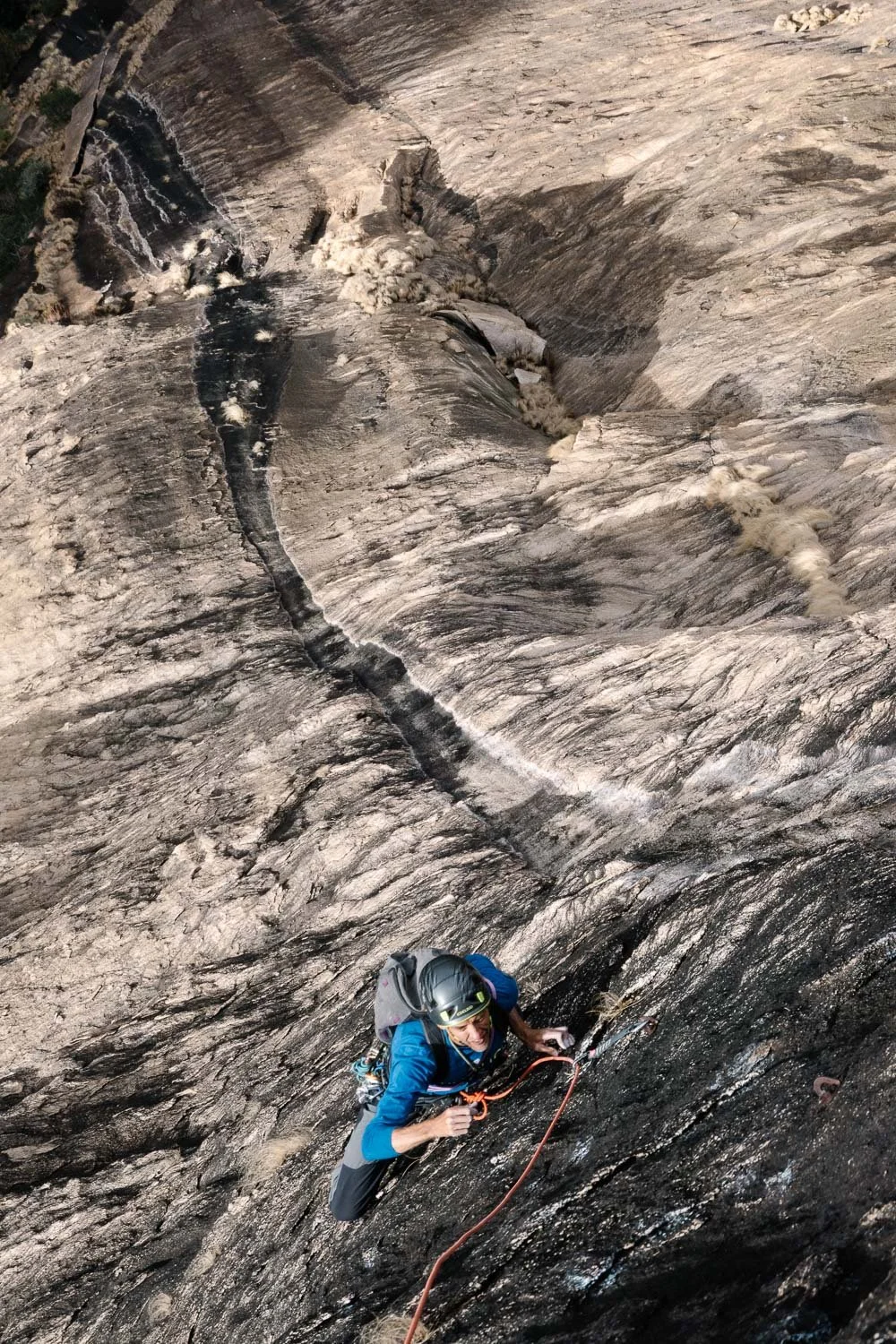
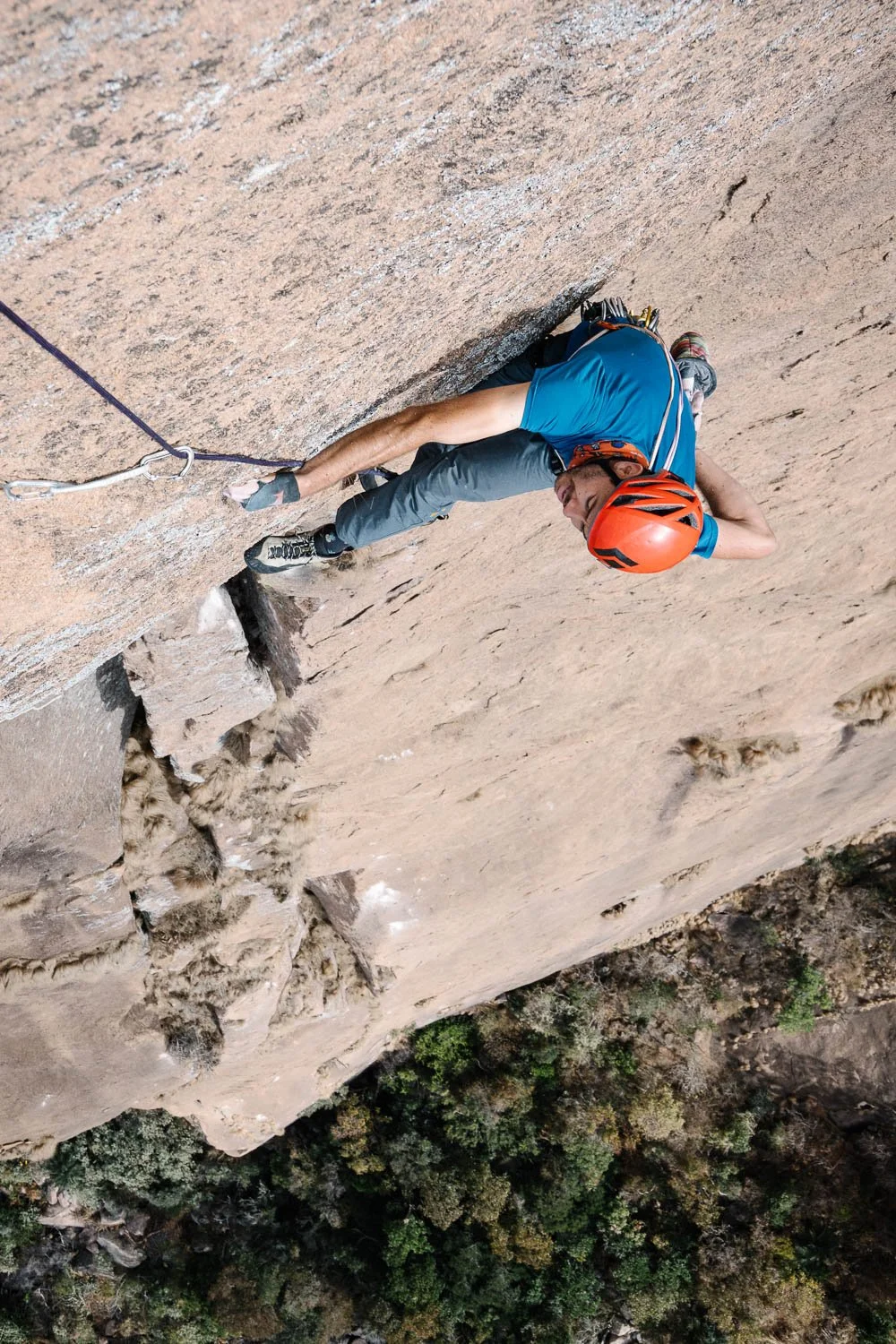
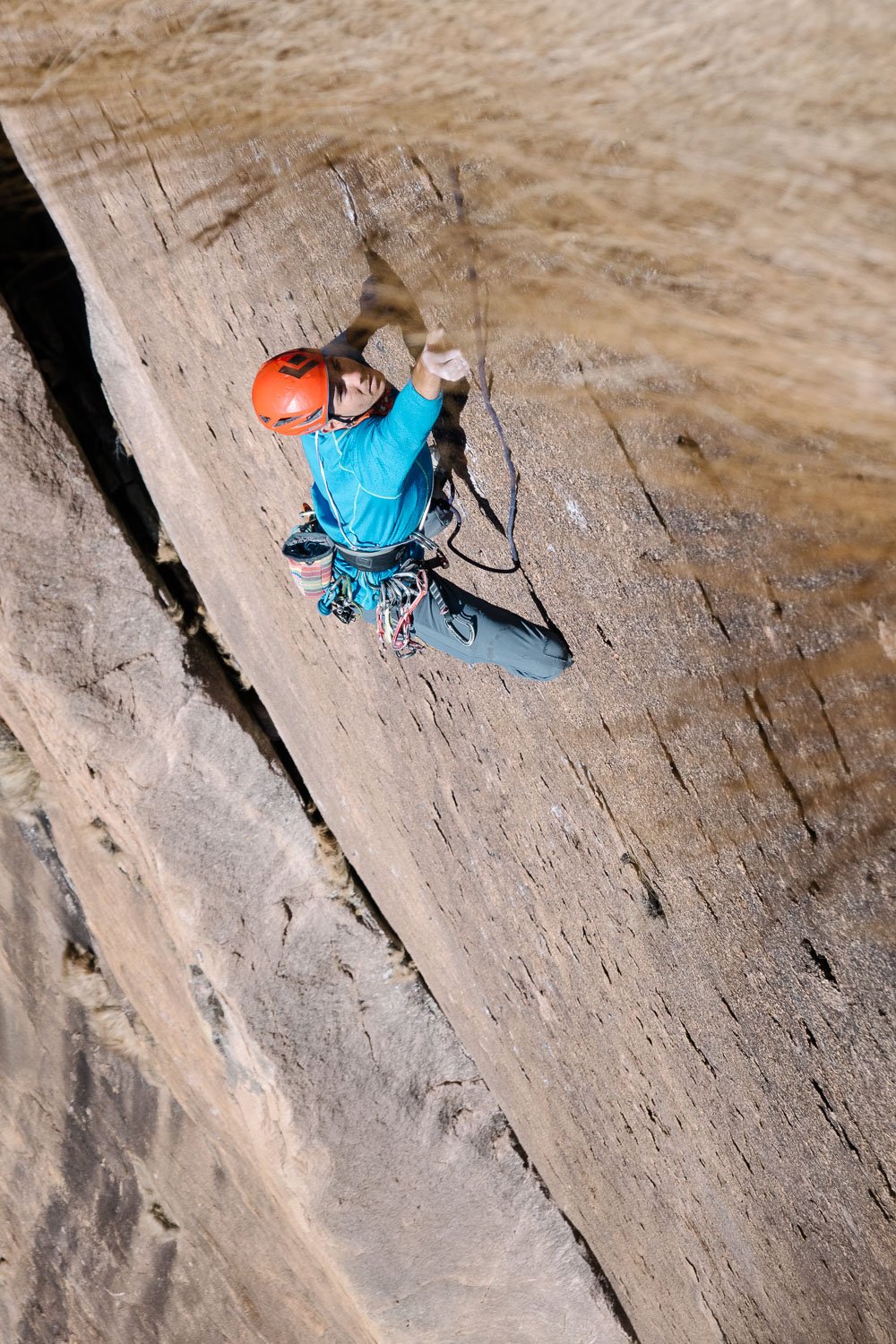
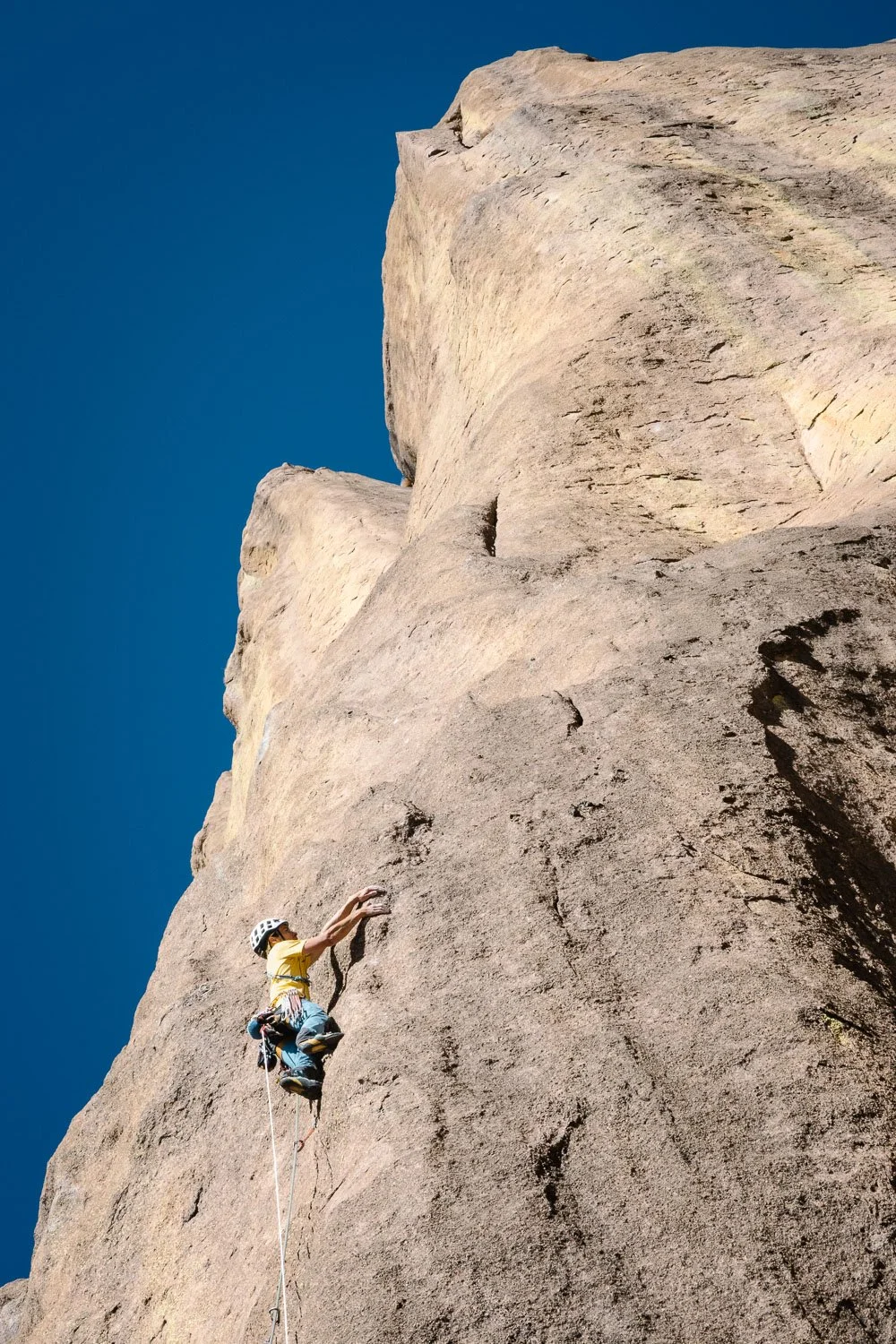
With set objectives and such mood we were able to climb the following routes distributed throughout the main rock faces: Air Society (Camaleon), Le Crabe Aux Pince D’Or (Mitsinjoarivo), Línea Blanca (Tsaranoro Kelly), Scolothomb (Camaleon), Rain Boto (Karambory), Out of Africa (Tsaranoro Kelly), Soava Via (Tsaranoro Atsimo), Cuento de Habas (Tsaranoro Be, in a day attempt), Tsaradonga (Lemur Wall) and Mai Píu Cosí (Tsaranoro Atsimo). Thanks a lot to all openers of these gems.
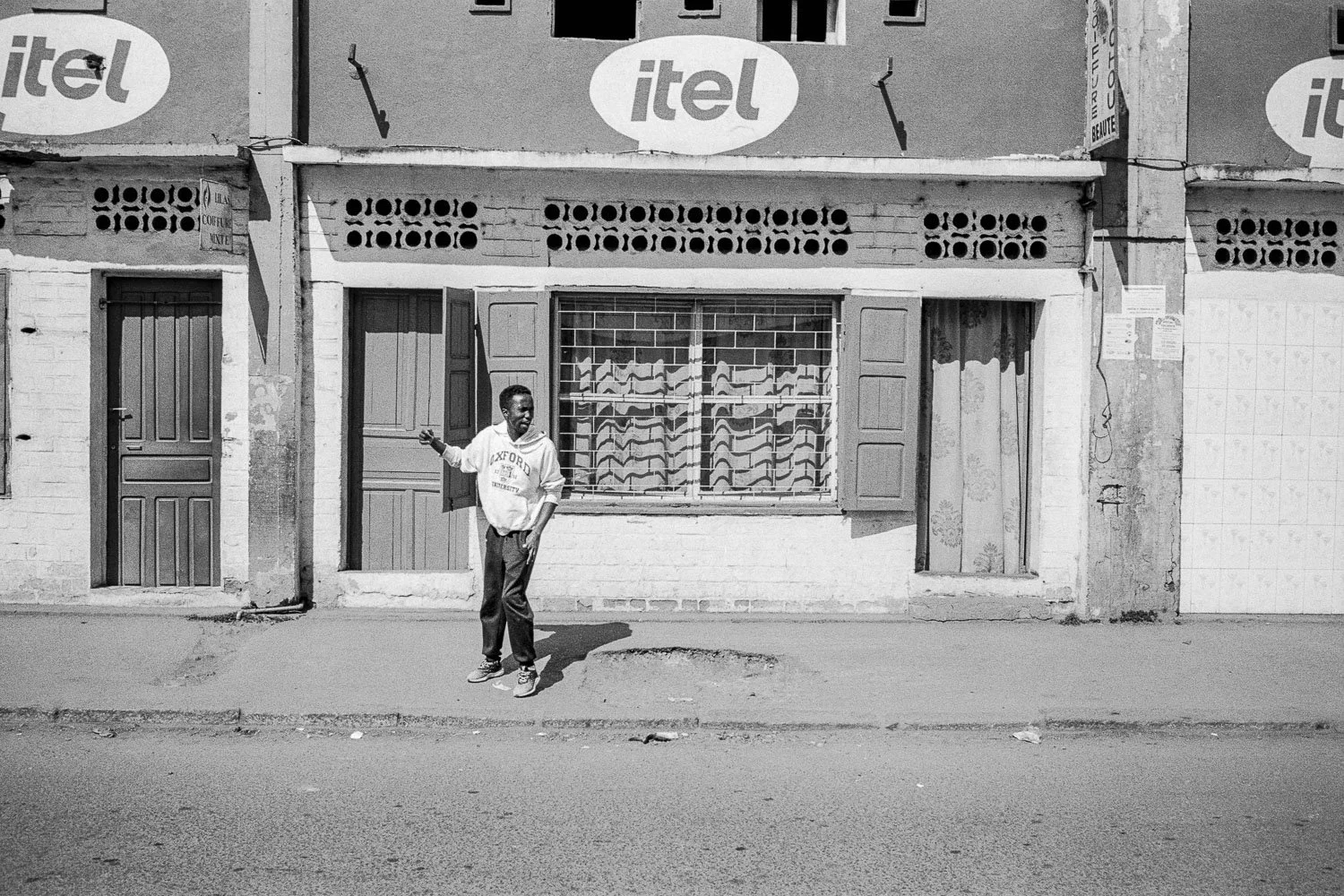
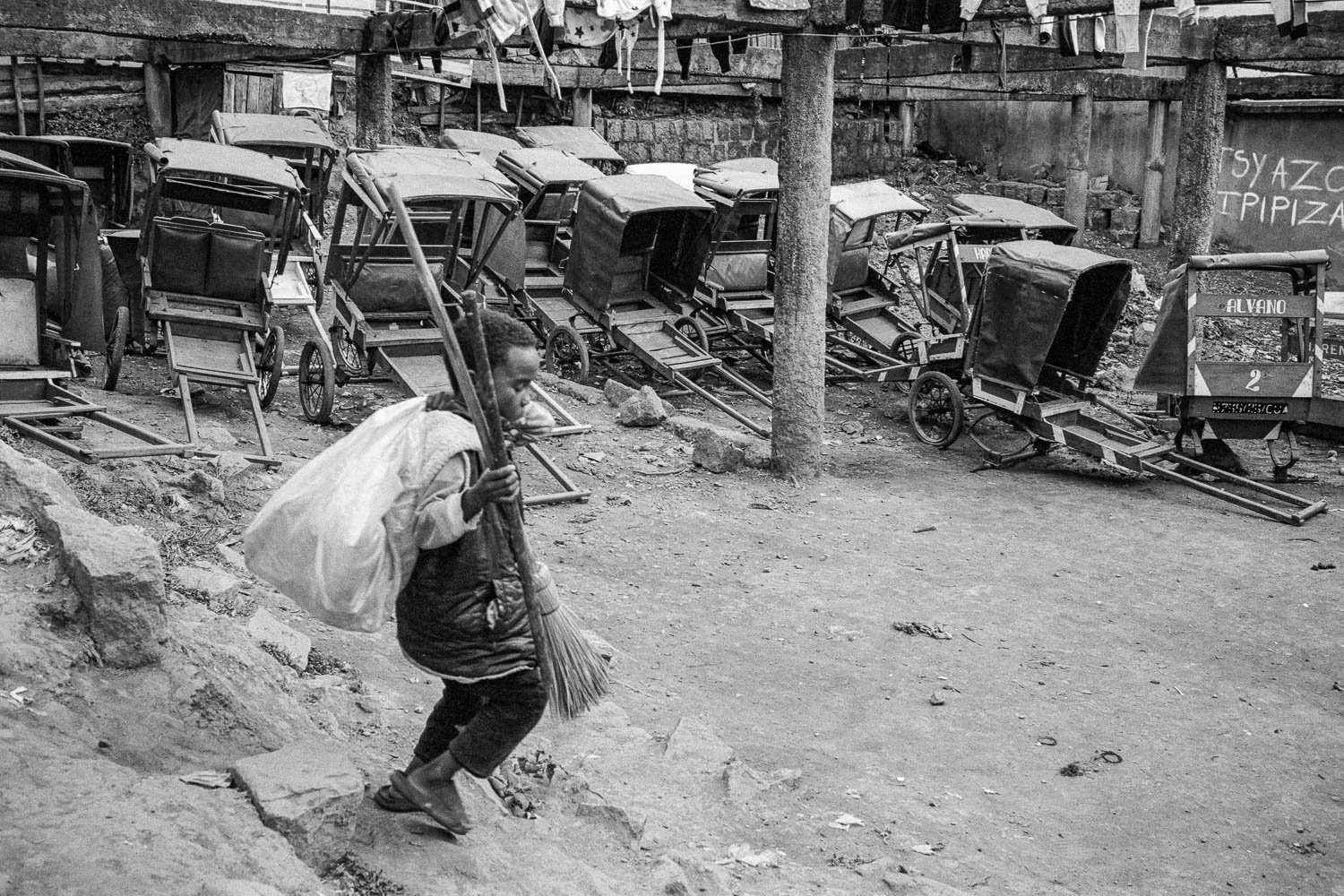
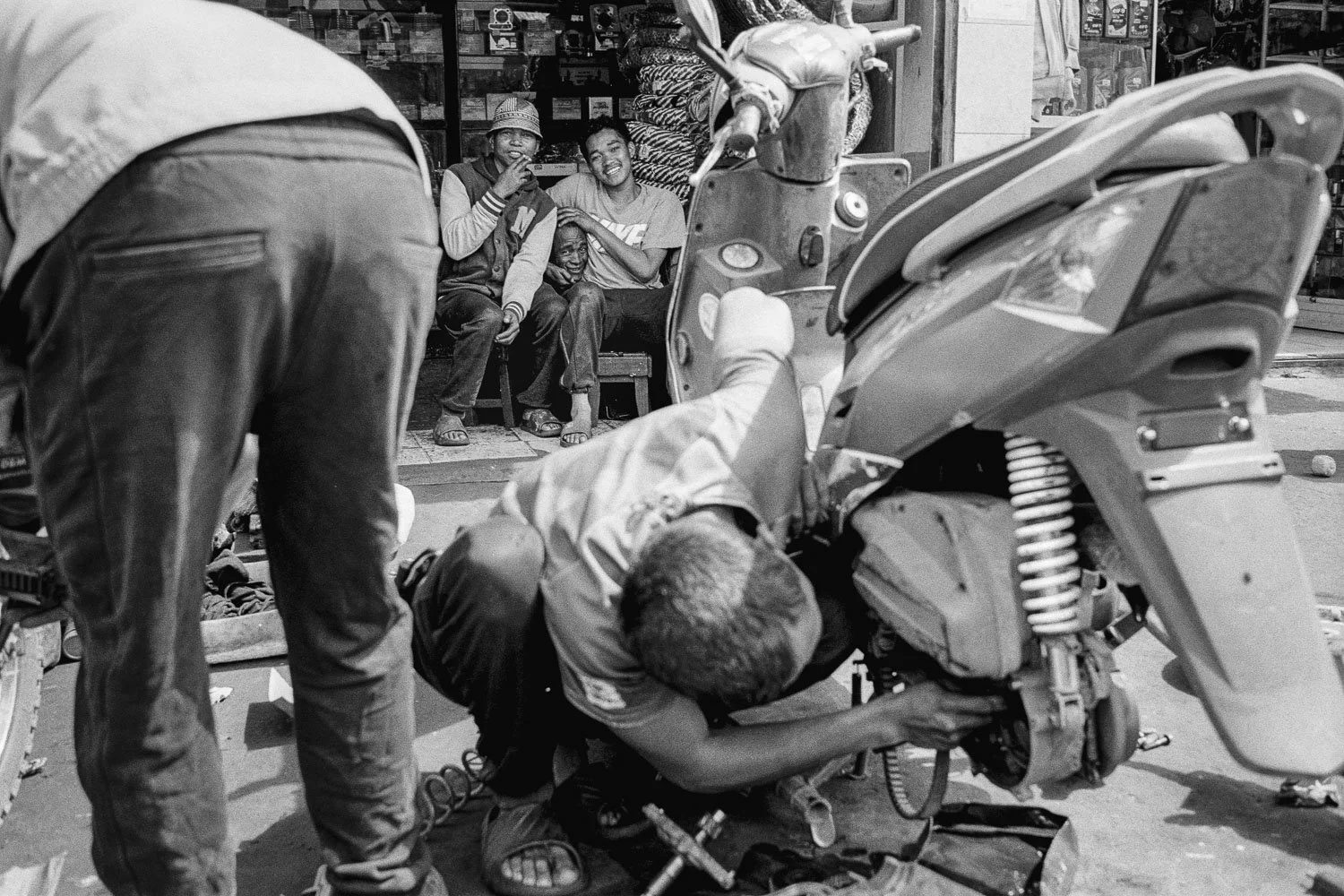
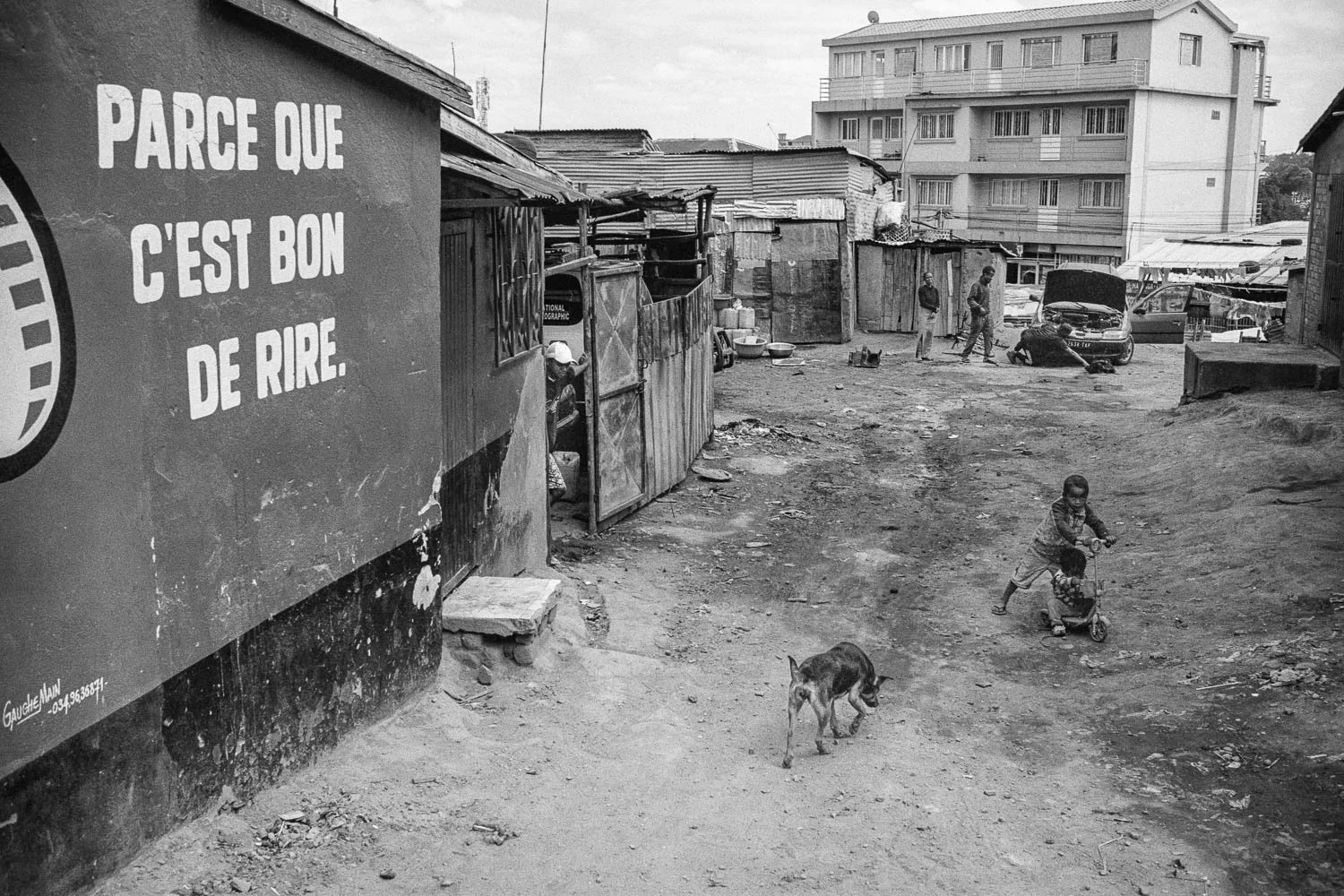
Once again, it felt like the time had come and that most of the experiences up to this point had been good preparation, not only in the climbing realm but also travelling wise. The gesture that takes time to honour in order to overcome complex granite moves, the on-sighting skills to navigate through runouts, the big wall maneuvers and fitness necessary to do multi-day activity; the capacity to interpret (to a certain extent) the economic and societal contrasts that define Africa as well as the observation of the singular ecology of the island. The Tsaranoro routes were a kind of check out, one that came with good results but opened questions of whether I’m willing to “indulge” further in this recipe, and add a few more ingredients that I have tried before in order to accomplish more vertical dreams. Just now, what I saw from livelihood in this place is enough an answer and surely diverges in priorities from these dilemmas of ours.
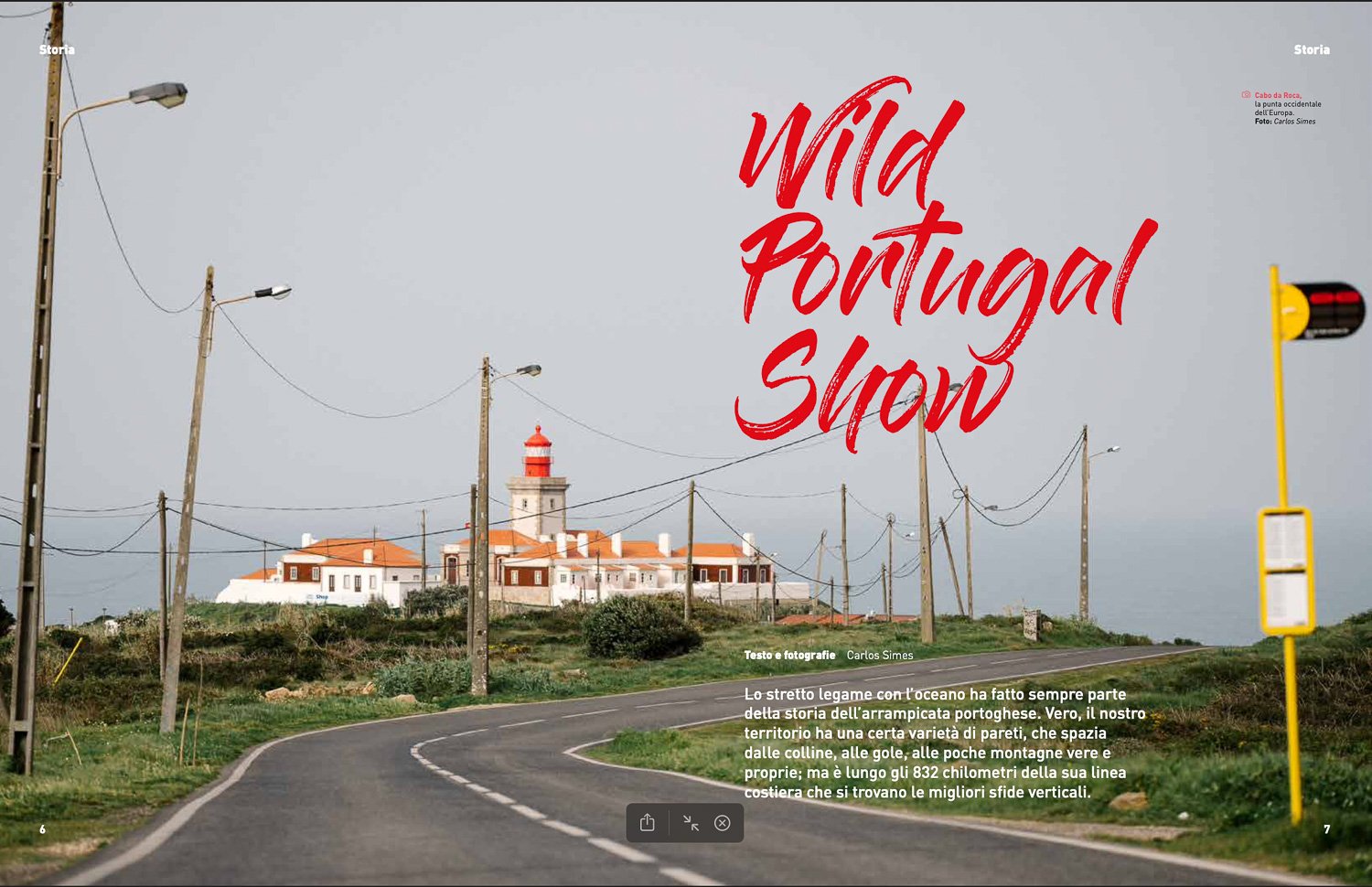
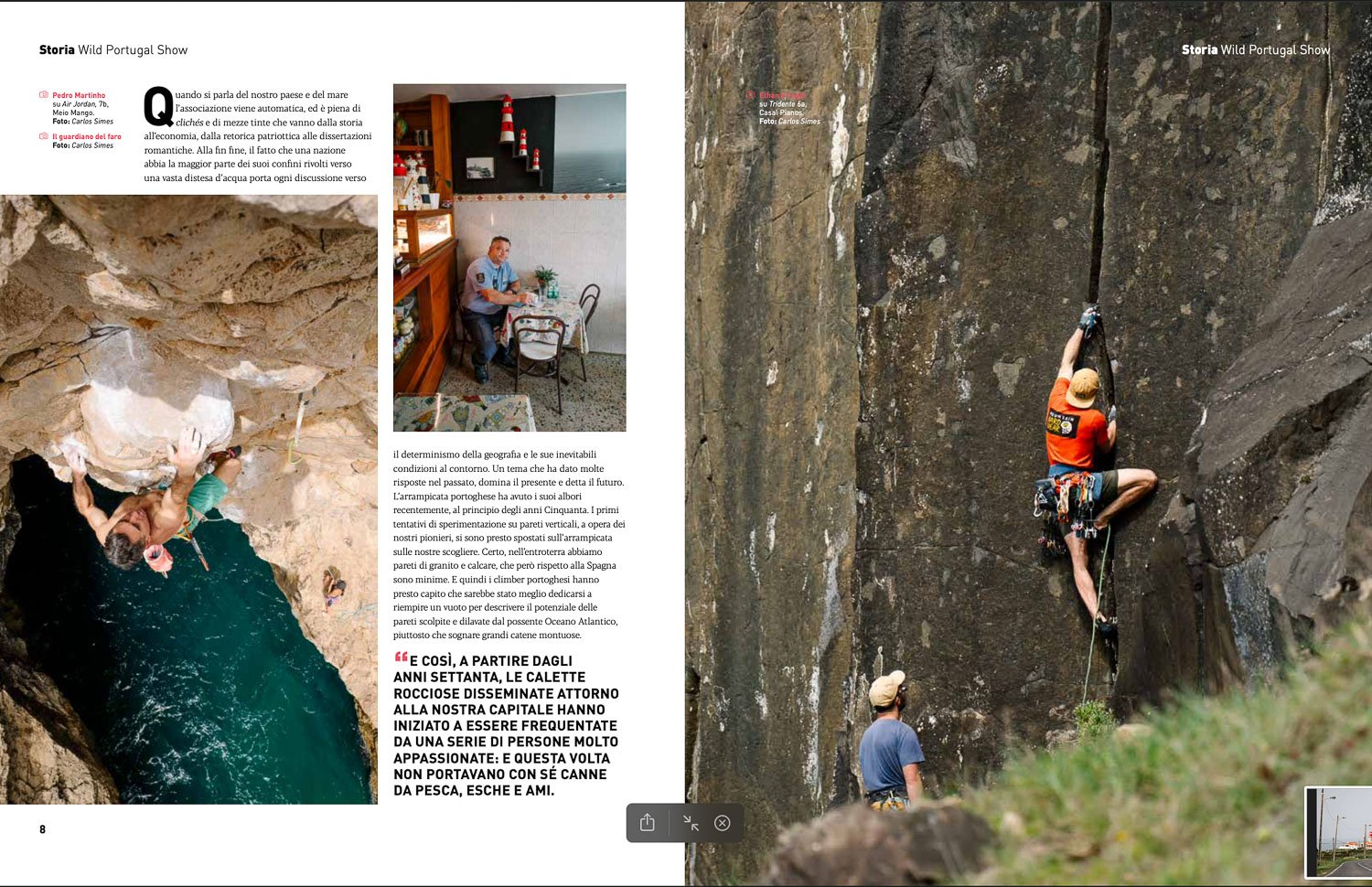
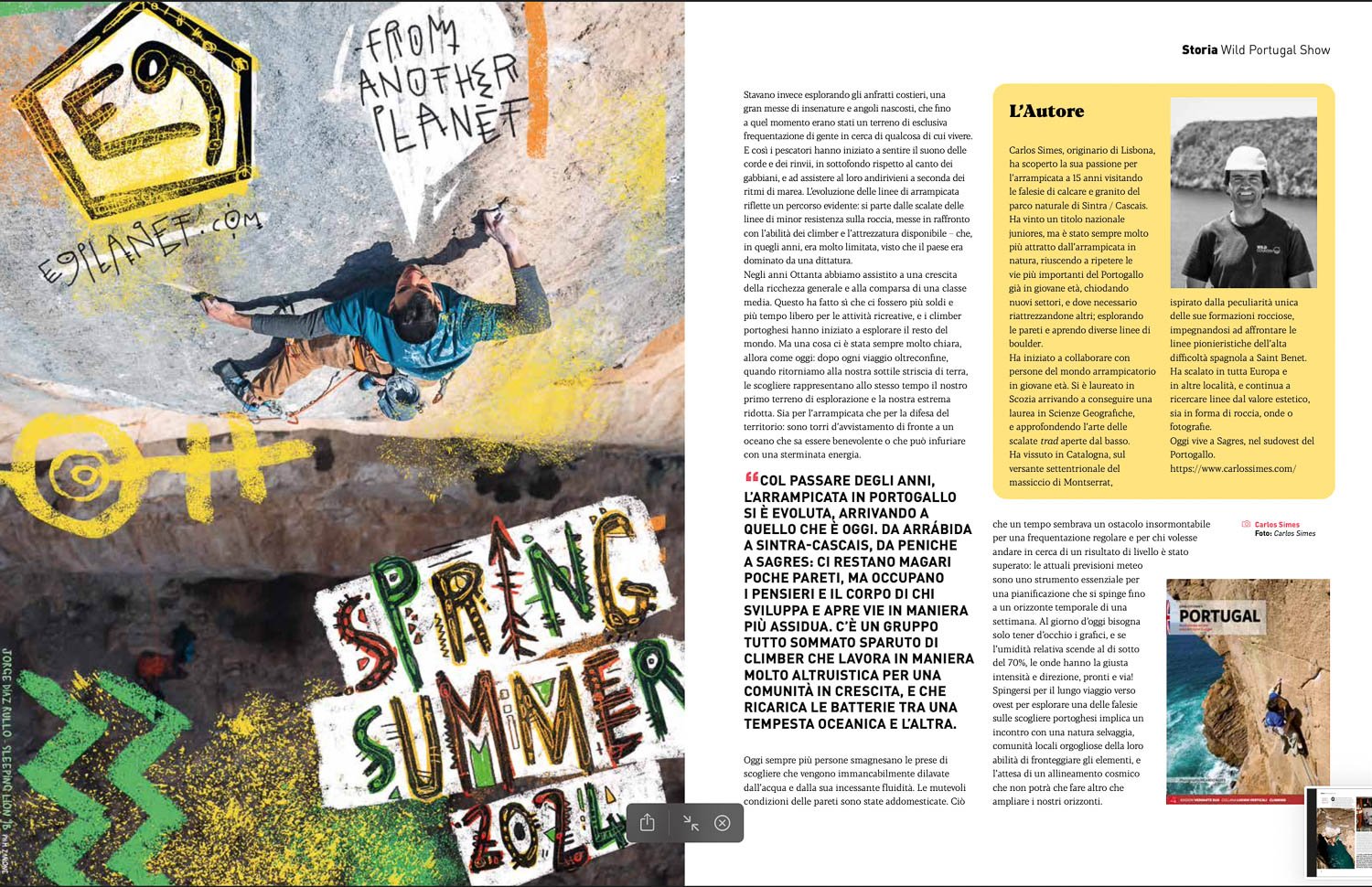
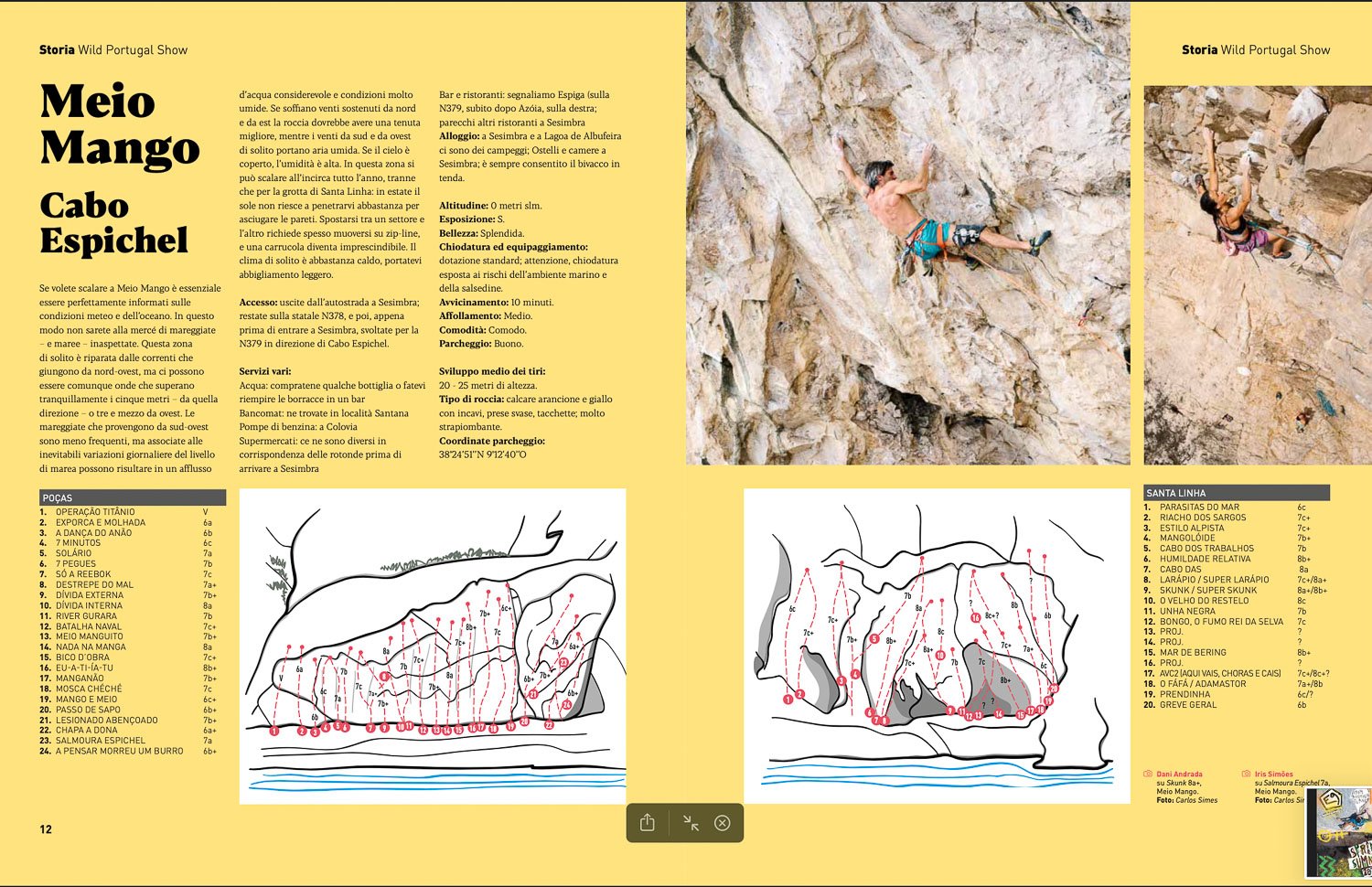
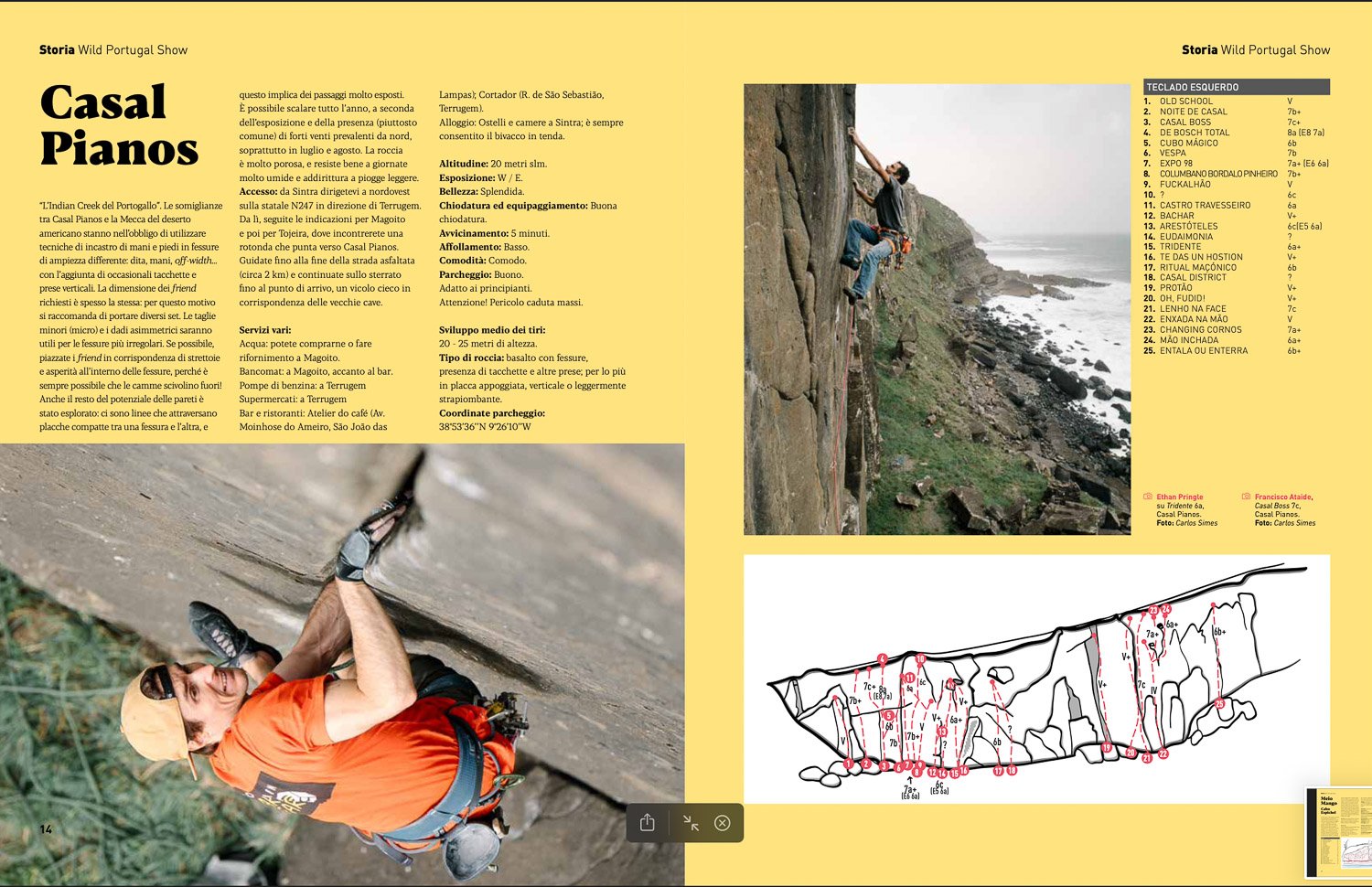
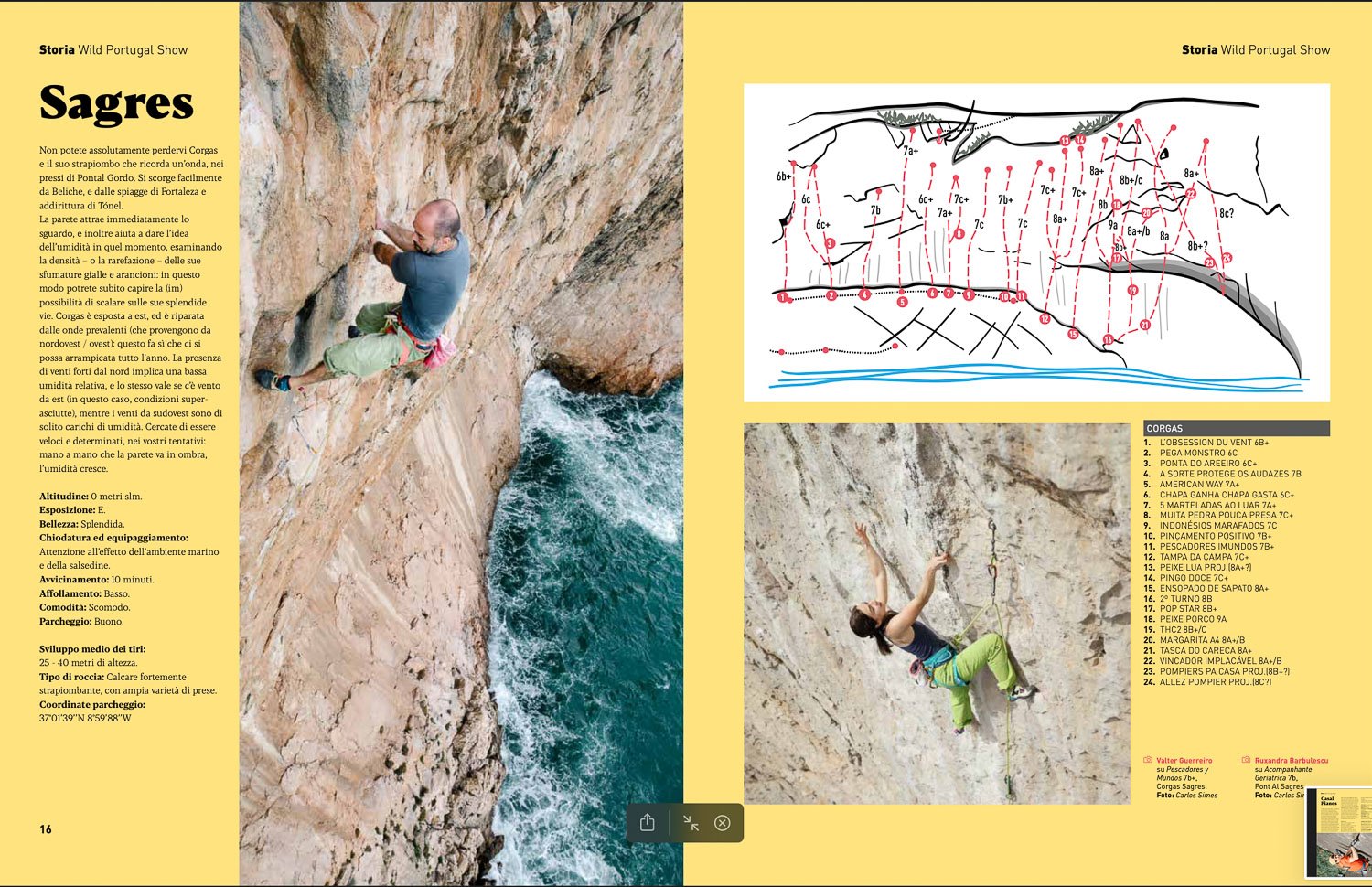
Commissioned article (personal photography and text) published in the Italian print magazine Up Climbing #30, with a selection of three of Portugal’s sea cliffs.
My fourth time in Morocco and the High Atlas region. The first flying to the neighbouring country and climbing in the gorges surrounding the village of Taghia. Seven days and five long routes, from which the difficult classic L’Axe du Mal, on superb rock, ropes camaraderie with Mikel Bonilla, Vitor Sanchez, Adrià Solera, Roger Corull; and while experiencing both the unchanged and the ongoing on the local Berber culture and mountains. The certainty of a new visit.

Thanks Atlas Lisboa for the interview.
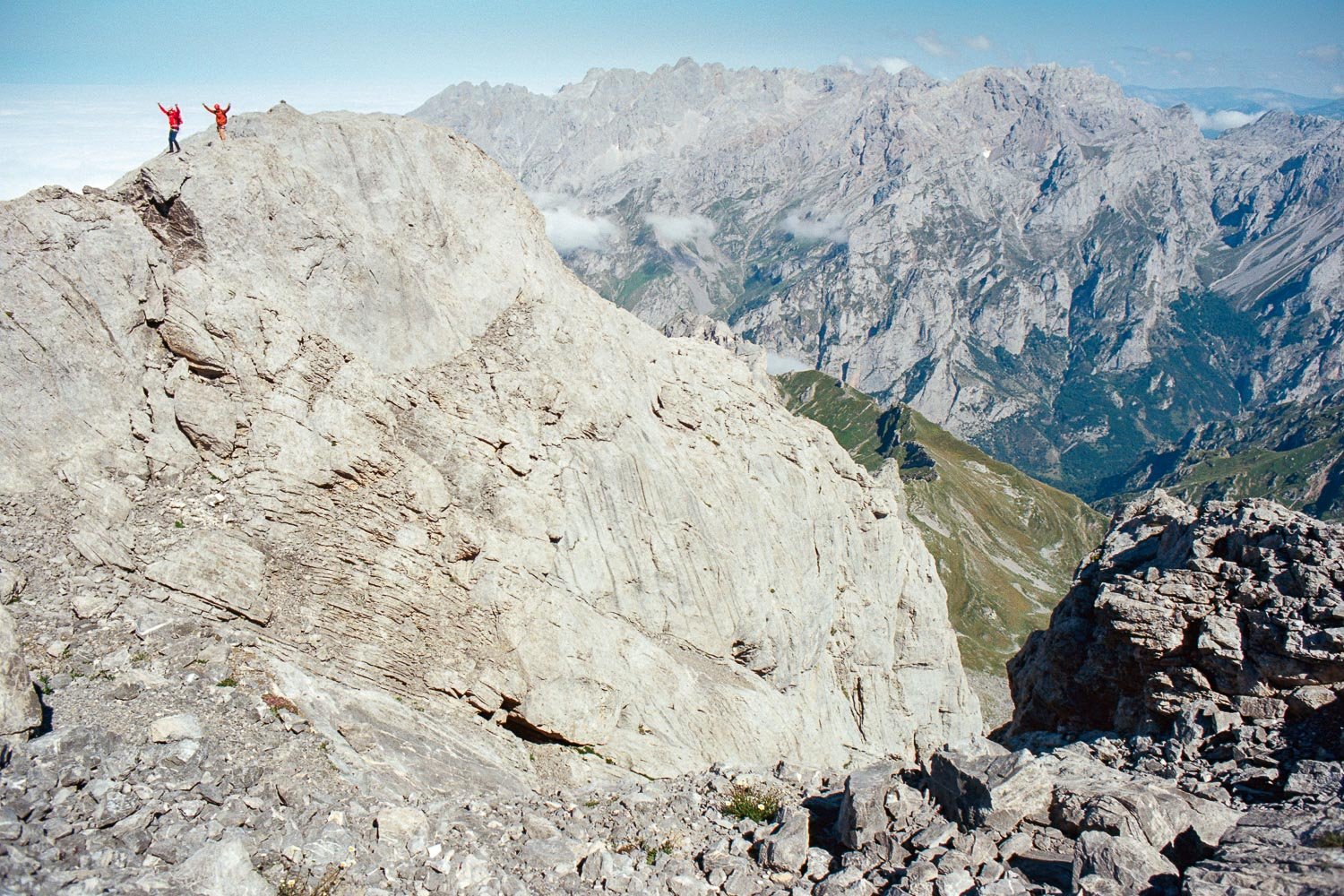
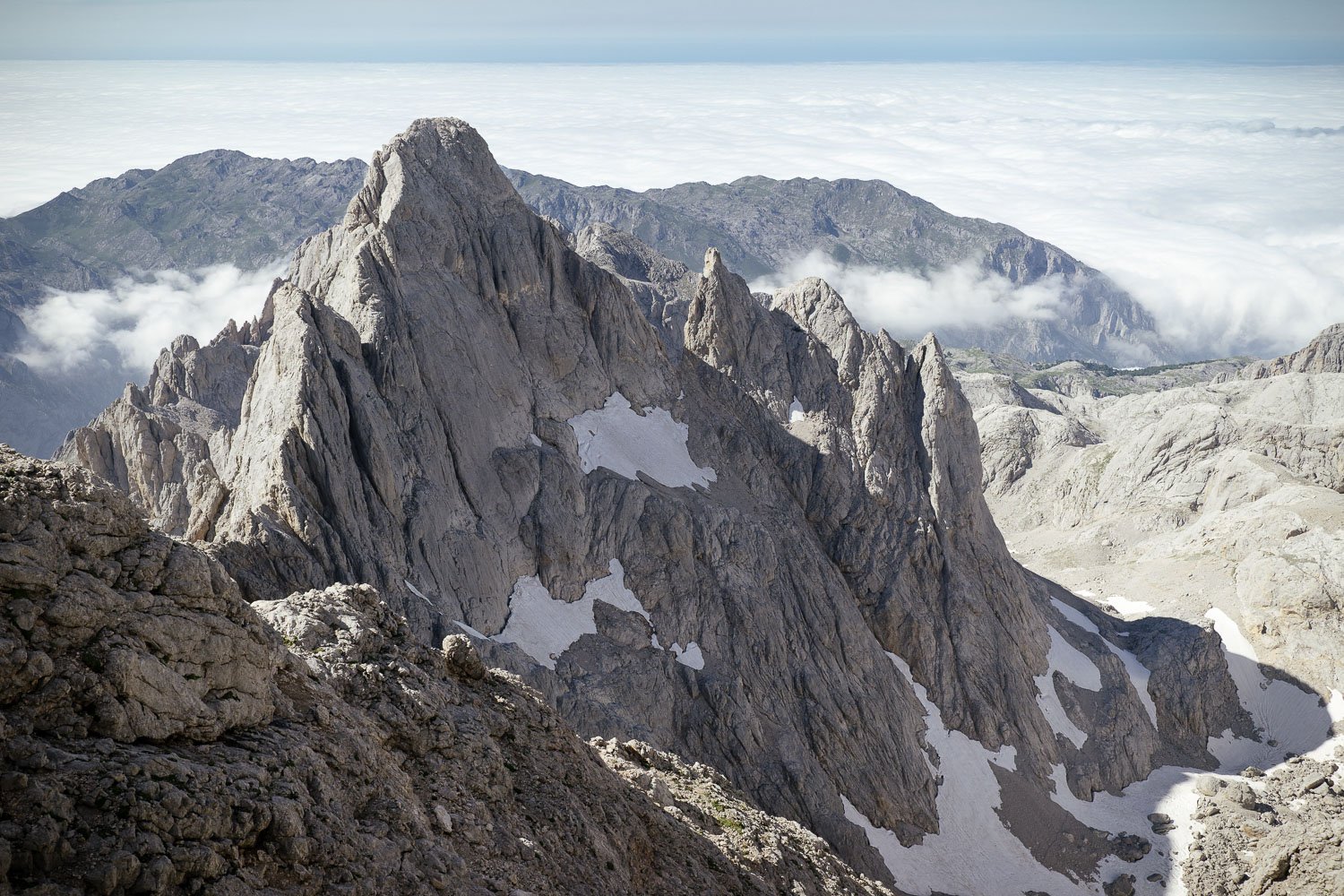
At the beginning of August, together with João Saraiva and Mário Inocêncio, we headed one week to Picos da Europa to climb some old and modern classic long routes.
We started warming up and waiting for the weather to settle on the south face of the range at Hoces de Vegacervera. The following day we drove and approached Vega Huerta hiking from Caldevilla de Valdéon in between mists, cow bells and into the early evening darkness, bivouacking in a cave facing Peña Santa. We climbed the obligatory Resgate Emocional, negotiating the wall complex way down with a few references in mind from a previous activity and descending back to the car on the journey. A rest day spent travelling across the gorges to the north side was the perfect excuse to refuel with filling Asturian food and cider, as well as strolling the streets of Cangas de Onís old town amidst lively summer movement. The night was spent in a random football pitch on the way to Arenas de Cabrales.
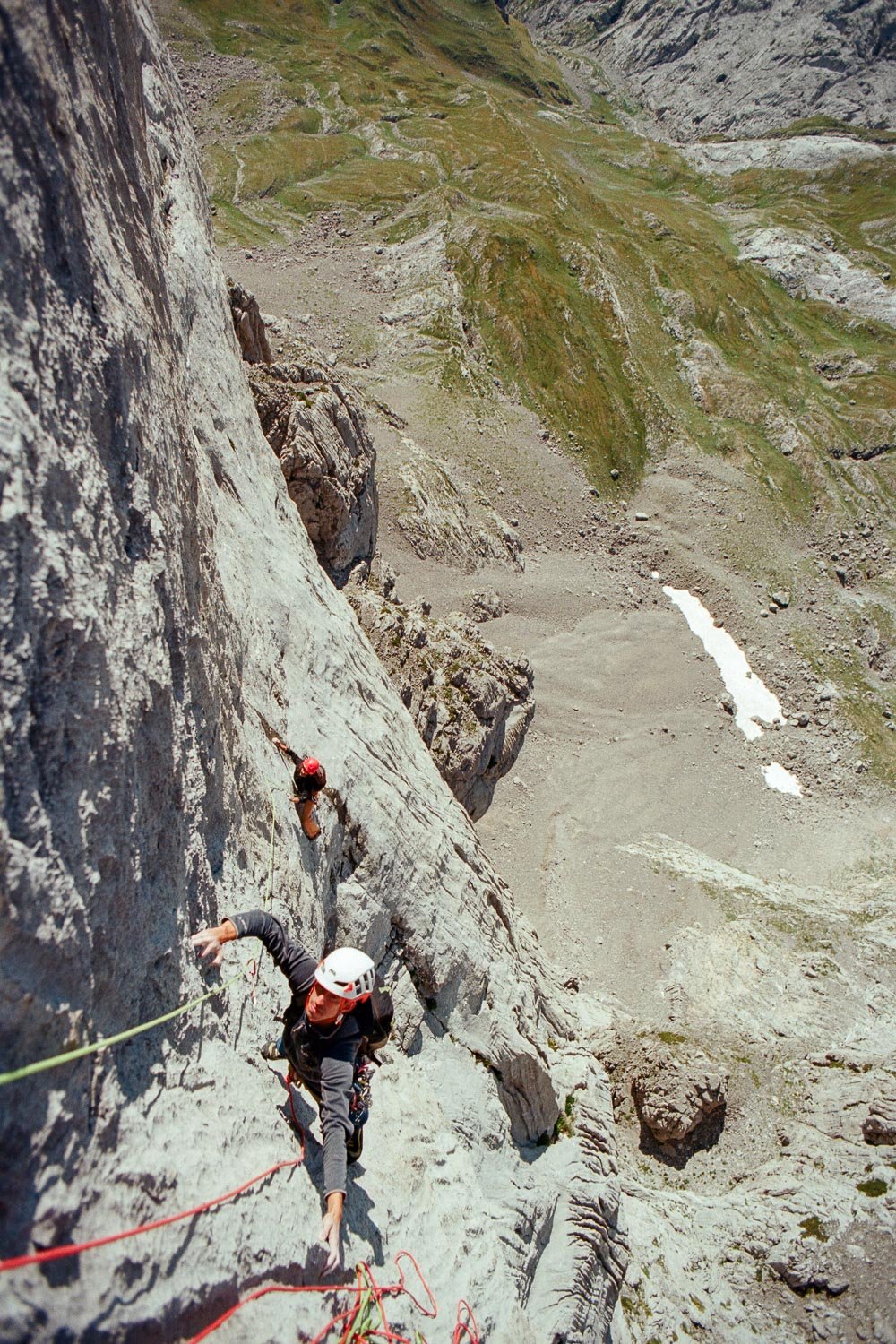
Afterwards came the usual routine of sharing loads, walking to and pitching tent at Vega de Urriellu. The next morning Naranjo de Bulnes’ wake up call came in the form of a bouldery first pitch. It took me a couple of goes to send it, before continuing onsighting the remnant twelve rope lengths of the excellent Gizon Berri Bat Naiz (Soy un Hombre Nuevo). We took it easy on the subsequent dawn-to-dark, hydrating, chatting to recently meet climbers, searching for fresh shades around camp and solar showering with a view.
During the last 24 hours of this trip, I enjoyed doing the Rabadá-Navarro, seven hundred and fifty meters of Urriellu’s West face line of weakness, with Joãozinho. Five hours tent-to-tent (with a lot of non-stop simultaneous climbing), before packing everything, walking down the valley, clearing straight into the car and Portugal through a late-night of driving that ended it all, as if we were a police patrol.
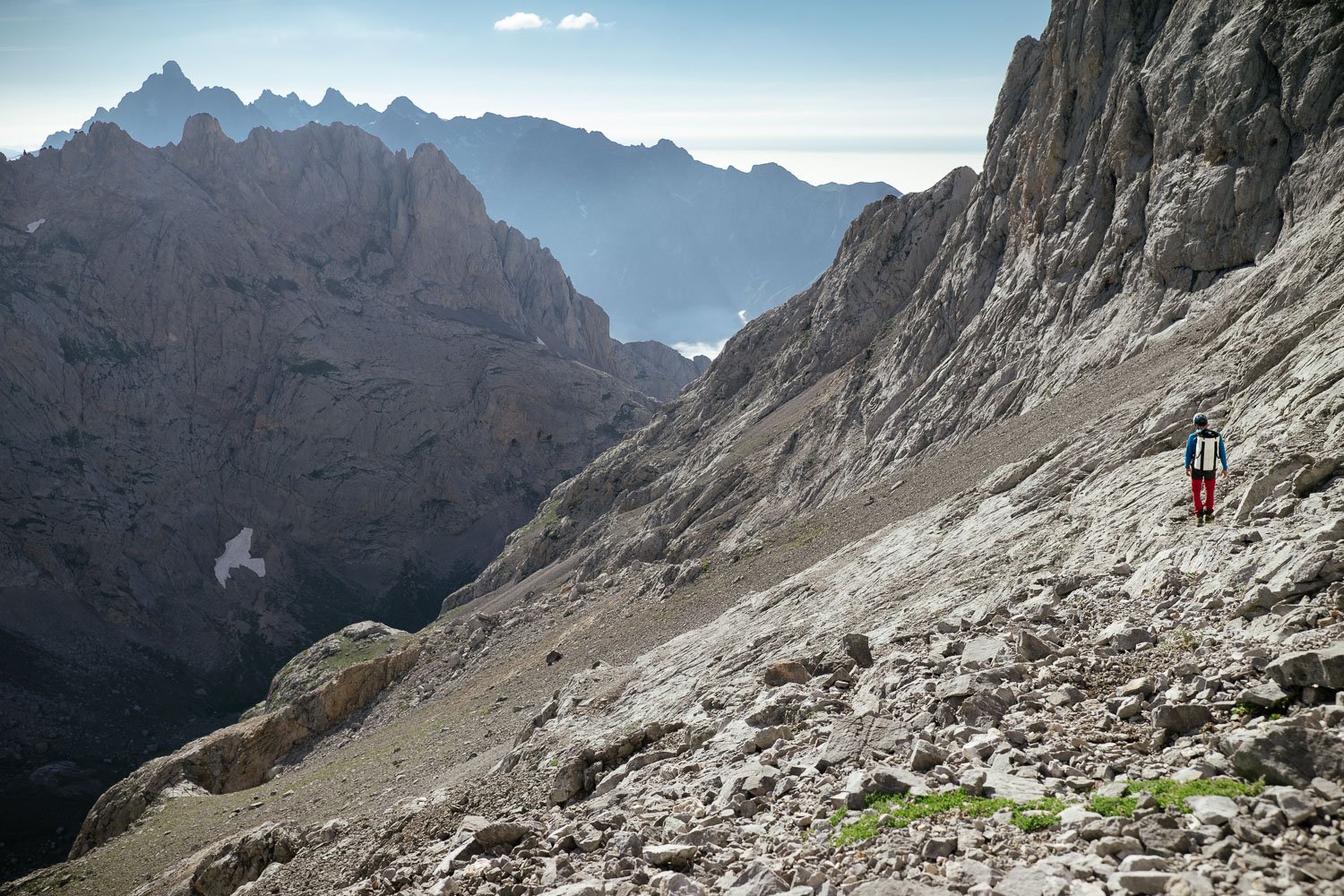
18 hours and 4200m of unevenness, to climb Torre Cerredo's west face Nómadas en Tierra de Nadie, in-a-day.
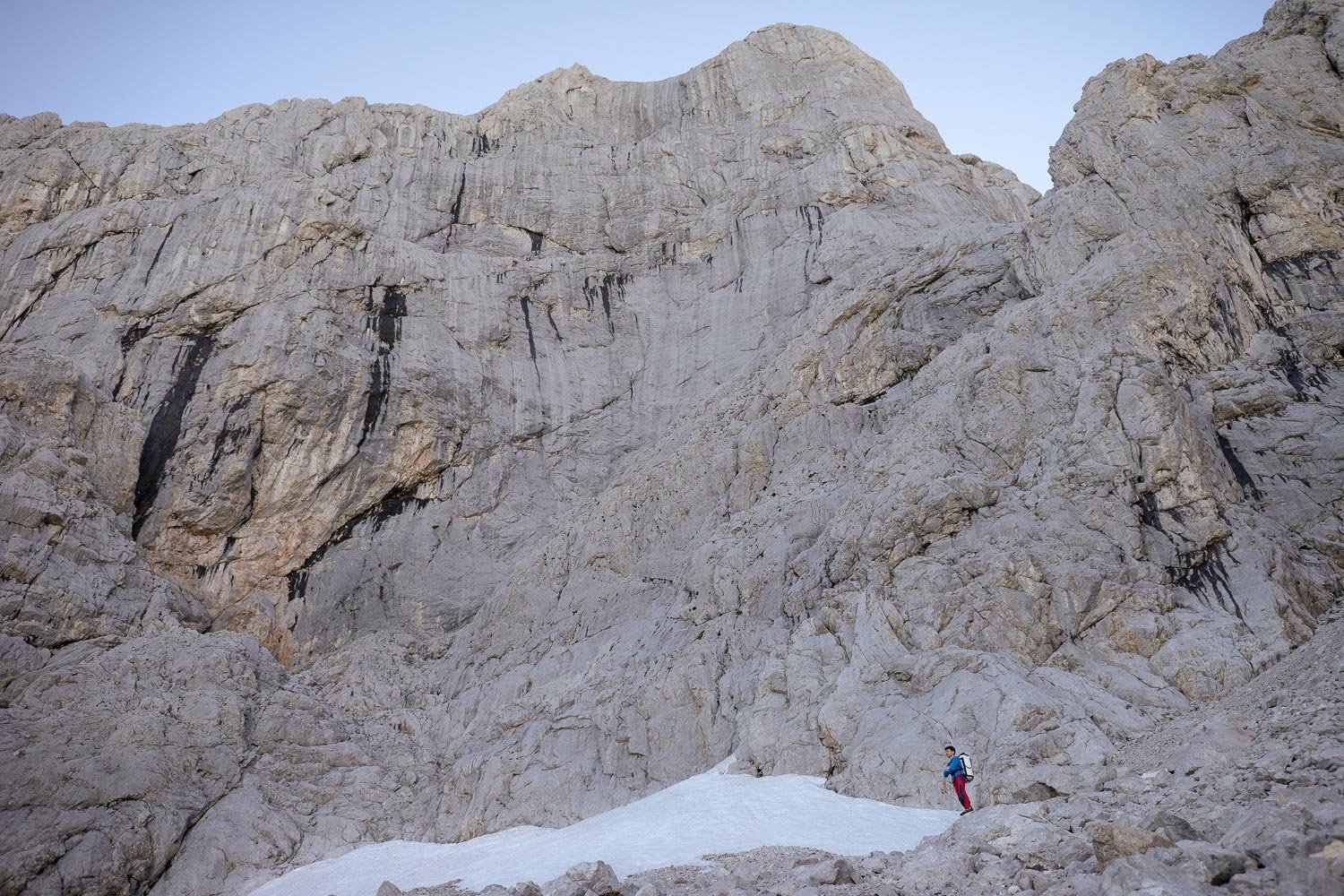
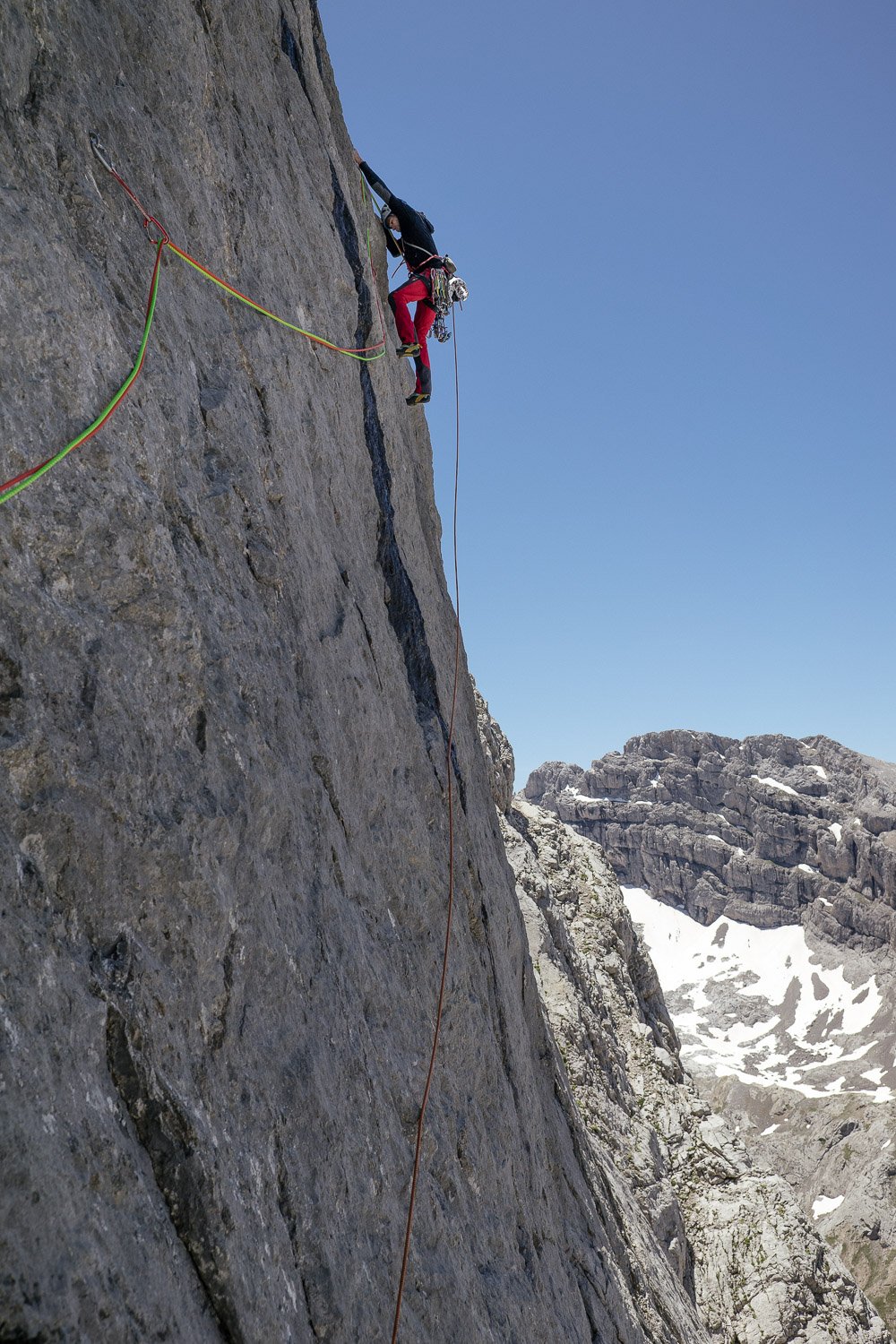
The idea was to meet in Picos da Europa and have some fun. Not surprisingly, “Samu” Ortega, came up with the plan to get on the above-mentioned climb, which he, Eduardo de Deus and Rubén de Francisco had opened the previous summer. No one had tried it yet, so repeating sending the pitches was the prime task at hand but, a further twist needed to be added... Considering the wall’s remote location and in order to avoid a two-day outing and consequent logistics, as well as willingness to approach via the “famous” Canal de Dobresengos*, the in-a-day activity was born.
We started walking from Caín - pretty much the lowest altitude (460m) at Picos de Europa – at five in the morning, getting to the bottom of the wall (2250m) 4h40m later; climbed 400m in nine rope lengths of high quality grey limestone – rigorously opened with very technical, obligatory free climbing up to 7a+ difficulties - ; topped at the roof of the range (2648m) on a good timing, all in all this was only act 2/4; down-climbed from the summit towards the Bermeja gap and scree slopes back to Hoyo Grande (3/4); recomposed with a bocadillo and, made up our minds – personally I picked some tunes - to re-immerse our bodies and attention on the remaining steep 1500m downwards.
We arrived at eleven in the evening to Caín with weakened legs, sore feet, frantic laughs; the same quietness and faded yellow street lights that defined the small village, clustered deep there in the limestone karst: 4/4.
* “Access Caín - Dobresengos - Hoyo Grande: Avoid if you do with a heavy backpack, at midday and without water, there's 1500m of vertical gain in one of the most impressive couloirs of the massif. If you like Picos, you'll end up doing it at least one time in your life. Consider 5h”. BENGOCHEA, Angel ; RODRIGUEZ, Miguel – Sector N.5: Cerredo. In Escalada en Roca en Los Picos de Europa: 2009. p. 206
Today died Joseph Shabalala, the leader and one of the founders of the Zulu band Ladysmith Black Mambazo. Well known for advocating the pacifist transformation of society through the self, its lyrics and performances have been ever since the apartheid, one of the strongest embassies of South Africa. Here’s a moment from the concert at the Cadaval Palace the 25th of April, 2019.
"Tough times never last, strong people do (...)"